



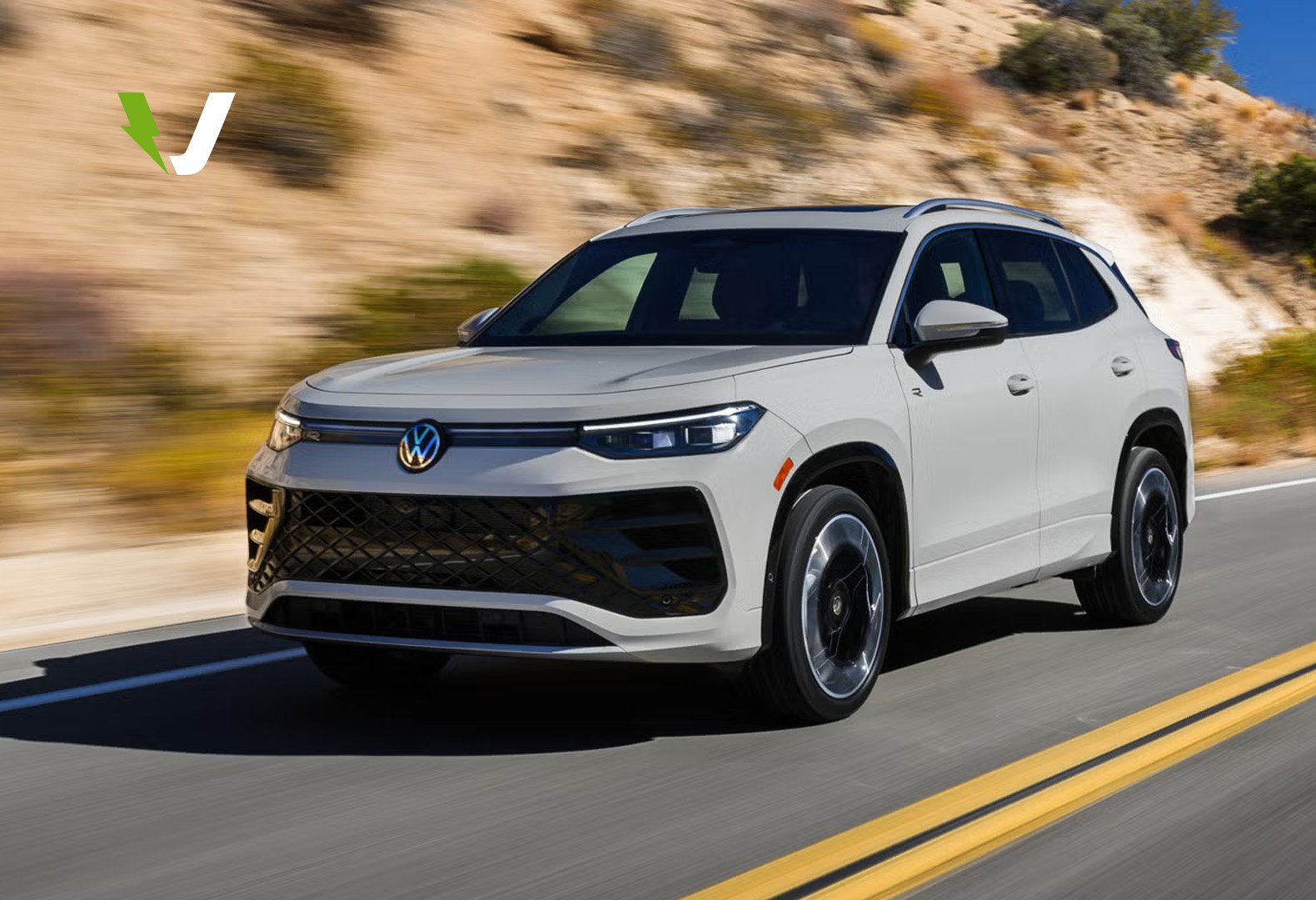
Electric Tiguan: What We Know About Volkswagen’s EV SUV
Dernière mise à jour: August 25, 2026
The electric Tiguan is not yet an officially launched Volkswagen production model under that exact name. However, Volkswagen is preparing a heavily updated electric SUV related to the current ID.4, and reputable automotive reporting indicates it is expected to adopt the ID. Tiguan name.
That makes the search term important but also easy to misunderstand. Today’s Volkswagen Tiguan remains available with combustion, mild-hybrid, and plug-in hybrid powertrains, while the expected ID. Tiguan would be a separate fully electric vehicle.
Table of Contents
- What Is the Electric Tiguan?
- How It Relates to the Volkswagen ID.4
- Expected Battery, Range and Charging
- Connected Technology and Software
- Electric Tiguan vs Tiguan eHybrid
- Expected Launch, Pricing and Competition
- FAQs
- Conclusion
Quick Information
| Detail | Expected Electric Tiguan |
|---|---|
| Likely name | Volkswagen ID. Tiguan |
| Vehicle type | Fully electric compact SUV |
| Current status | Not officially launched |
| Expected relationship | Major evolution of the ID.4 |
| Platform | Expected updated MEB/MEB+ architecture |
| Drive options | Expected rear-wheel and all-wheel drive |
| Battery sizes | Not officially confirmed |
| DC charging | Expected improvement over current ID.4 |
| Software | New-generation VW infotainment and connected services |
| Physical controls | Expected to return for key functions |
| Likely launch | 2026–2027 period |
| Official pricing | Not yet announced |
What Is the Electric Tiguan?
The electric Tiguan is expected to be Volkswagen’s electric counterpart to its extremely successful Tiguan SUV. Volkswagen has sold more than nine million Tiguans since the model first reached the market in 2007, making the name valuable as the company moves deeper into electric vehicles.
Volkswagen has already confirmed a broader strategy of bringing familiar names into its EV lineup. The company has officially adopted names such as ID. Polo, showing that future electric Volkswagens will increasingly use established model identities instead of relying only on numbers.
Automotive publication Autocar reports that Volkswagen internally refers to the heavily revised ID.4 as the “electric Tiguan,” and later reporting indicates the production model is expected to use the ID. Tiguan name. Volkswagen itself has not yet released a final global specification sheet under that badge.
Internal linking opportunity: Link this section to articles about Volkswagen ID.4, Volkswagen Tiguan eHybrid, or MEB electric-car platforms.
How the Electric Tiguan Relates to the ID.4
Rather than being an entirely unrelated vehicle, the expected ID. Tiguan appears to be evolving from Volkswagen’s existing ID.4 electric SUV.
Autocar reports that the updated vehicle will receive major exterior and interior changes rather than a simple cosmetic refresh. Volkswagen design chief Andreas Mindt has described the future SUV as a larger sibling to the new ID. Cross, with a more conventional Volkswagen design language.
The new approach is important because early ID models deliberately looked different from cars such as the Golf and Tiguan. Volkswagen now appears to be moving toward EVs that feel more familiar to existing customers.
Expected design changes
Reports suggest the electric Tiguan could receive:
- More upright SUV styling
- Conventional door handles
- New LED lighting
- A redesigned dashboard
- More physical buttons
- Improved materials
- Updated displays and infotainment
Carscoops reports that prototypes show a design closer to a traditional Volkswagen SUV, while still keeping the basic electric proportions associated with the ID.4.
Expected Battery, Range and Charging
Volkswagen has not yet published official electric Tiguan battery capacities, range figures, or charging speeds.
Reports indicate the SUV will continue using Volkswagen Group’s modular electric architecture, most likely in an updated MEB configuration. The current MEB platform already supports rear-wheel-drive and dual-motor all-wheel-drive EVs.
What could improve?
The next-generation architecture is expected to focus on:
- Better battery efficiency
- Faster DC charging
- Improved electric motors
- Lower energy consumption
- More efficient thermal management
- Updated battery-management software
These are logical developments, but exact figures remain unconfirmed.
For comparison, Volkswagen’s newer compact EVs show how the company is improving batteries and charging. The 2026 ID. Cross uses either a 37 kWh or 52 kWh usable battery and supports up to 105 kW DC charging with the larger pack.
The electric Tiguan will sit in a larger and more expensive segment, so its battery will almost certainly be larger, but any specific capacity or range figure should be treated as speculation until Volkswagen confirms it.
Connected Technology and Software
The electric Tiguan is expected to receive a major software and user-interface upgrade.
Volkswagen’s latest EV strategy emphasizes connected functions, software updates, modern driver-assistance systems, and easier controls. The company’s newer electric products also introduce more intuitive interfaces after criticism of touch-sensitive controls used on earlier ID models.
Physical controls are expected to return
One of the most notable changes is the expected return of traditional controls.
Autocar reports that Volkswagen intends to restore:
- A physical volume knob
- Conventional steering-wheel buttons
- More direct climate controls
- A redesigned dashboard interface
This may sound minor, but it addresses one of the most common complaints about previous-generation Volkswagen ID interiors.
Connected features are also expected to include navigation-based charging planning, smartphone integration, cloud services, voice commands, and potentially AI-assisted functions similar to those already appearing elsewhere in Volkswagen’s lineup.
Electric Tiguan vs Tiguan eHybrid
A key point for buyers is that today’s Tiguan is not a fully electric vehicle.
Volkswagen currently sells the third-generation Tiguan with gasoline, diesel, mild-hybrid, and plug-in hybrid powertrains depending on the market. The Tiguan eHybrid can travel more than 100 km electrically under European testing before using its gasoline engine.
| Electric Tiguan / ID. Tiguan | Tiguan eHybrid |
| Fully electric | Plug-in hybrid |
| No gasoline engine | Electric motor + gasoline engine |
| Requires charging | Can charge or refuel |
| Zero tailpipe emissions | Tailpipe emissions when engine runs |
| Expected dedicated EV architecture | Based on Tiguan combustion platform |
| Best with reliable charging | More flexible for long trips without chargers |
Practical example
A driver who commutes 40 km daily and can charge at home may prefer the fully electric model because almost every journey could be completed without gasoline.
Someone who regularly drives through areas with limited charging may prefer the Tiguan eHybrid because the gasoline engine provides additional flexibility.
Expected Launch, Pricing and Competition
Reports published during 2026 increasingly suggest that the updated ID.4-based SUV will move toward the ID. Tiguan identity.
Carscoops expects the model for the 2027 model year, while earlier Autocar reporting described a 2026–2027 timing window. Volkswagen has not yet announced final delivery dates or market-specific availability.
What could it compete against?
Likely rivals include:
- Tesla Model Y
- Skoda Enyaq
- Hyundai Ioniq 5
- Kia EV5
- Ford Explorer EV
- Audi Q4 e-tron
- Toyota bZ4X
Pricing also remains unofficial. Motor1 has discussed an estimated European starting point around €40,000, but this remains an industry estimate rather than confirmed Volkswagen pricing.
Buyers should therefore avoid treating online estimates as a final MSRP.
FAQs
1. Is there an electric Volkswagen Tiguan?
Not as a fully launched production model under that exact name yet. Volkswagen is expected to transform its ID.4-class electric SUV into a model associated with the Tiguan name.
2. Will it be called the ID. Tiguan?
Current automotive reporting strongly suggests ID. Tiguan, but Volkswagen has not yet published a complete global launch announcement confirming all model details.
3. Is the current Tiguan electric?
No. The current Tiguan offers combustion, mild-hybrid, and plug-in hybrid powertrains. The eHybrid can drive substantial distances electrically but still contains a gasoline engine.
4. What battery will the electric Tiguan use?
Volkswagen has not announced its final battery specifications. The model is expected to use an updated version of the company’s MEB electric-vehicle architecture.
5. When will the electric Tiguan launch?
Current reports point to the 2026–2027 period, with the ID. Tiguan expected to emerge from the heavily revised ID.4 program. Final market launch dates remain unconfirmed.
Conclusion
The electric Tiguan appears to be moving from a long-discussed idea toward an important part of Volkswagen’s next EV generation. Rather than simply electrifying the existing Tiguan, Volkswagen is expected to transform its ID.4-class electric SUV with more familiar Tiguan-style branding, improved software, revised controls, and updated EV technology.
Readers can follow confirmed model information through Volkswagen Newsroom, review Volkswagen’s current electric lineup through Volkswagen’s ID. family, and follow development reporting from Autocar.
For now, the most accurate view is that the electric Tiguan is an expected future electric SUV, commonly associated with the ID. Tiguan name, while final battery specifications, range, charging speed, pricing, and launch details still require official Volkswagen confirmation.Electric Tiguan: What We Know About Volkswagen’s EV SUV
Dernière mise à jour: August 25, 2026
The electric Tiguan is not yet an officially launched Volkswagen production model under that exact name. However, Volkswagen is preparing a heavily updated electric SUV related to the current ID.4, and reputable automotive reporting indicates it is expected to adopt the ID. Tiguan name.
That makes the search term important but also easy to misunderstand. Today’s Volkswagen Tiguan remains available with combustion, mild-hybrid, and plug-in hybrid powertrains, while the expected ID. Tiguan would be a separate fully electric vehicle.
Table of Contents
- What Is the Electric Tiguan?
- How It Relates to the Volkswagen ID.4
- Expected Battery, Range and Charging
- Connected Technology and Software
- Electric Tiguan vs Tiguan eHybrid
- Expected Launch, Pricing and Competition
- FAQs
- Conclusion
Quick Information
| Detail | Expected Electric Tiguan |
|---|---|
| Likely name | Volkswagen ID. Tiguan |
| Vehicle type | Fully electric compact SUV |
| Current status | Not officially launched |
| Expected relationship | Major evolution of the ID.4 |
| Platform | Expected updated MEB/MEB+ architecture |
| Drive options | Expected rear-wheel and all-wheel drive |
| Battery sizes | Not officially confirmed |
| DC charging | Expected improvement over current ID.4 |
| Software | New-generation VW infotainment and connected services |
| Physical controls | Expected to return for key functions |
| Likely launch | 2026–2027 period |
| Official pricing | Not yet announced |
What Is the Electric Tiguan?
The electric Tiguan is expected to be Volkswagen’s electric counterpart to its extremely successful Tiguan SUV. Volkswagen has sold more than nine million Tiguans since the model first reached the market in 2007, making the name valuable as the company moves deeper into electric vehicles.
Volkswagen has already confirmed a broader strategy of bringing familiar names into its EV lineup. The company has officially adopted names such as ID. Polo, showing that future electric Volkswagens will increasingly use established model identities instead of relying only on numbers.
Automotive publication Autocar reports that Volkswagen internally refers to the heavily revised ID.4 as the “electric Tiguan,” and later reporting indicates the production model is expected to use the ID. Tiguan name. Volkswagen itself has not yet released a final global specification sheet under that badge.
Internal linking opportunity: Link this section to articles about Volkswagen ID.4, Volkswagen Tiguan eHybrid, or MEB electric-car platforms.
How the Electric Tiguan Relates to the ID.4
Rather than being an entirely unrelated vehicle, the expected ID. Tiguan appears to be evolving from Volkswagen’s existing ID.4 electric SUV.
Autocar reports that the updated vehicle will receive major exterior and interior changes rather than a simple cosmetic refresh. Volkswagen design chief Andreas Mindt has described the future SUV as a larger sibling to the new ID. Cross, with a more conventional Volkswagen design language.
The new approach is important because early ID models deliberately looked different from cars such as the Golf and Tiguan. Volkswagen now appears to be moving toward EVs that feel more familiar to existing customers.
Expected design changes
Reports suggest the electric Tiguan could receive:
- More upright SUV styling
- Conventional door handles
- New LED lighting
- A redesigned dashboard
- More physical buttons
- Improved materials
- Updated displays and infotainment
Carscoops reports that prototypes show a design closer to a traditional Volkswagen SUV, while still keeping the basic electric proportions associated with the ID.4.
Expected Battery, Range and Charging
Volkswagen has not yet published official electric Tiguan battery capacities, range figures, or charging speeds.
Reports indicate the SUV will continue using Volkswagen Group’s modular electric architecture, most likely in an updated MEB configuration. The current MEB platform already supports rear-wheel-drive and dual-motor all-wheel-drive EVs.
What could improve?
The next-generation architecture is expected to focus on:
- Better battery efficiency
- Faster DC charging
- Improved electric motors
- Lower energy consumption
- More efficient thermal management
- Updated battery-management software
These are logical developments, but exact figures remain unconfirmed.
For comparison, Volkswagen’s newer compact EVs show how the company is improving batteries and charging. The 2026 ID. Cross uses either a 37 kWh or 52 kWh usable battery and supports up to 105 kW DC charging with the larger pack.
The electric Tiguan will sit in a larger and more expensive segment, so its battery will almost certainly be larger, but any specific capacity or range figure should be treated as speculation until Volkswagen confirms it.
Connected Technology and Software
The electric Tiguan is expected to receive a major software and user-interface upgrade.
Volkswagen’s latest EV strategy emphasizes connected functions, software updates, modern driver-assistance systems, and easier controls. The company’s newer electric products also introduce more intuitive interfaces after criticism of touch-sensitive controls used on earlier ID models.
Physical controls are expected to return
One of the most notable changes is the expected return of traditional controls.
Autocar reports that Volkswagen intends to restore:
- A physical volume knob
- Conventional steering-wheel buttons
- More direct climate controls
- A redesigned dashboard interface
This may sound minor, but it addresses one of the most common complaints about previous-generation Volkswagen ID interiors.
Connected features are also expected to include navigation-based charging planning, smartphone integration, cloud services, voice commands, and potentially AI-assisted functions similar to those already appearing elsewhere in Volkswagen’s lineup.
Electric Tiguan vs Tiguan eHybrid
A key point for buyers is that today’s Tiguan is not a fully electric vehicle.
Volkswagen currently sells the third-generation Tiguan with gasoline, diesel, mild-hybrid, and plug-in hybrid powertrains depending on the market. The Tiguan eHybrid can travel more than 100 km electrically under European testing before using its gasoline engine.
| Electric Tiguan / ID. Tiguan | Tiguan eHybrid |
| Fully electric | Plug-in hybrid |
| No gasoline engine | Electric motor + gasoline engine |
| Requires charging | Can charge or refuel |
| Zero tailpipe emissions | Tailpipe emissions when engine runs |
| Expected dedicated EV architecture | Based on Tiguan combustion platform |
| Best with reliable charging | More flexible for long trips without chargers |
Practical example
A driver who commutes 40 km daily and can charge at home may prefer the fully electric model because almost every journey could be completed without gasoline.
Someone who regularly drives through areas with limited charging may prefer the Tiguan eHybrid because the gasoline engine provides additional flexibility.
Expected Launch, Pricing and Competition
Reports published during 2026 increasingly suggest that the updated ID.4-based SUV will move toward the ID. Tiguan identity.
Carscoops expects the model for the 2027 model year, while earlier Autocar reporting described a 2026–2027 timing window. Volkswagen has not yet announced final delivery dates or market-specific availability.
What could it compete against?
Likely rivals include:
- Tesla Model Y
- Skoda Enyaq
- Hyundai Ioniq 5
- Kia EV5
- Ford Explorer EV
- Audi Q4 e-tron
- Toyota bZ4X
Pricing also remains unofficial. Motor1 has discussed an estimated European starting point around €40,000, but this remains an industry estimate rather than confirmed Volkswagen pricing.
Buyers should therefore avoid treating online estimates as a final MSRP.
FAQs
1. Is there an electric Volkswagen Tiguan?
Not as a fully launched production model under that exact name yet. Volkswagen is expected to transform its ID.4-class electric SUV into a model associated with the Tiguan name.
2. Will it be called the ID. Tiguan?
Current automotive reporting strongly suggests ID. Tiguan, but Volkswagen has not yet published a complete global launch announcement confirming all model details.
3. Is the current Tiguan electric?
No. The current Tiguan offers combustion, mild-hybrid, and plug-in hybrid powertrains. The eHybrid can drive substantial distances electrically but still contains a gasoline engine.
4. What battery will the electric Tiguan use?
Volkswagen has not announced its final battery specifications. The model is expected to use an updated version of the company’s MEB electric-vehicle architecture.
5. When will the electric Tiguan launch?
Current reports point to the 2026–2027 period, with the ID. Tiguan expected to emerge from the heavily revised ID.4 program. Final market launch dates remain unconfirmed.
Conclusion
The electric Tiguan appears to be moving from a long-discussed idea toward an important part of Volkswagen’s next EV generation. Rather than simply electrifying the existing Tiguan, Volkswagen is expected to transform its ID.4-class electric SUV with more familiar Tiguan-style branding, improved software, revised controls, and updated EV technology.
Readers can follow confirmed model information through Volkswagen Newsroom, review Volkswagen’s current electric lineup through Volkswagen’s ID. family, and follow development reporting from Autocar.
For now, the most accurate view is that the electric Tiguan is an expected future electric SUV, commonly associated with the ID. Tiguan name, while final battery specifications, range, charging speed, pricing, and launch details still require official Volkswagen confirmation.Electric Tiguan: What We Know About Volkswagen’s EV SUV
Dernière mise à jour: August 25, 2026
The electric Tiguan is not yet an officially launched Volkswagen production model under that exact name. However, Volkswagen is preparing a heavily updated electric SUV related to the current ID.4, and reputable automotive reporting indicates it is expected to adopt the ID. Tiguan name.
That makes the search term important but also easy to misunderstand. Today’s Volkswagen Tiguan remains available with combustion, mild-hybrid, and plug-in hybrid powertrains, while the expected ID. Tiguan would be a separate fully electric vehicle.
Table of Contents
- What Is the Electric Tiguan?
- How It Relates to the Volkswagen ID.4
- Expected Battery, Range and Charging
- Connected Technology and Software
- Electric Tiguan vs Tiguan eHybrid
- Expected Launch, Pricing and Competition
- FAQs
- Conclusion
Quick Information
| Detail | Expected Electric Tiguan |
|---|---|
| Likely name | Volkswagen ID. Tiguan |
| Vehicle type | Fully electric compact SUV |
| Current status | Not officially launched |
| Expected relationship | Major evolution of the ID.4 |
| Platform | Expected updated MEB/MEB+ architecture |
| Drive options | Expected rear-wheel and all-wheel drive |
| Battery sizes | Not officially confirmed |
| DC charging | Expected improvement over current ID.4 |
| Software | New-generation VW infotainment and connected services |
| Physical controls | Expected to return for key functions |
| Likely launch | 2026–2027 period |
| Official pricing | Not yet announced |
What Is the Electric Tiguan?
The electric Tiguan is expected to be Volkswagen’s electric counterpart to its extremely successful Tiguan SUV. Volkswagen has sold more than nine million Tiguans since the model first reached the market in 2007, making the name valuable as the company moves deeper into electric vehicles.
Volkswagen has already confirmed a broader strategy of bringing familiar names into its EV lineup. The company has officially adopted names such as ID. Polo, showing that future electric Volkswagens will increasingly use established model identities instead of relying only on numbers.
Automotive publication Autocar reports that Volkswagen internally refers to the heavily revised ID.4 as the “electric Tiguan,” and later reporting indicates the production model is expected to use the ID. Tiguan name. Volkswagen itself has not yet released a final global specification sheet under that badge.
Internal linking opportunity: Link this section to articles about Volkswagen ID.4, Volkswagen Tiguan eHybrid, or MEB electric-car platforms.
How the Electric Tiguan Relates to the ID.4
Rather than being an entirely unrelated vehicle, the expected ID. Tiguan appears to be evolving from Volkswagen’s existing ID.4 electric SUV.
Autocar reports that the updated vehicle will receive major exterior and interior changes rather than a simple cosmetic refresh. Volkswagen design chief Andreas Mindt has described the future SUV as a larger sibling to the new ID. Cross, with a more conventional Volkswagen design language.
The new approach is important because early ID models deliberately looked different from cars such as the Golf and Tiguan. Volkswagen now appears to be moving toward EVs that feel more familiar to existing customers.
Expected design changes
Reports suggest the electric Tiguan could receive:
- More upright SUV styling
- Conventional door handles
- New LED lighting
- A redesigned dashboard
- More physical buttons
- Improved materials
- Updated displays and infotainment
Carscoops reports that prototypes show a design closer to a traditional Volkswagen SUV, while still keeping the basic electric proportions associated with the ID.4.
Expected Battery, Range and Charging
Volkswagen has not yet published official electric Tiguan battery capacities, range figures, or charging speeds.
Reports indicate the SUV will continue using Volkswagen Group’s modular electric architecture, most likely in an updated MEB configuration. The current MEB platform already supports rear-wheel-drive and dual-motor all-wheel-drive EVs.
What could improve?
The next-generation architecture is expected to focus on:
- Better battery efficiency
- Faster DC charging
- Improved electric motors
- Lower energy consumption
- More efficient thermal management
- Updated battery-management software
These are logical developments, but exact figures remain unconfirmed.
For comparison, Volkswagen’s newer compact EVs show how the company is improving batteries and charging. The 2026 ID. Cross uses either a 37 kWh or 52 kWh usable battery and supports up to 105 kW DC charging with the larger pack.
The electric Tiguan will sit in a larger and more expensive segment, so its battery will almost certainly be larger, but any specific capacity or range figure should be treated as speculation until Volkswagen confirms it.
Connected Technology and Software
The electric Tiguan is expected to receive a major software and user-interface upgrade.
Volkswagen’s latest EV strategy emphasizes connected functions, software updates, modern driver-assistance systems, and easier controls. The company’s newer electric products also introduce more intuitive interfaces after criticism of touch-sensitive controls used on earlier ID models.
Physical controls are expected to return
One of the most notable changes is the expected return of traditional controls.
Autocar reports that Volkswagen intends to restore:
- A physical volume knob
- Conventional steering-wheel buttons
- More direct climate controls
- A redesigned dashboard interface
This may sound minor, but it addresses one of the most common complaints about previous-generation Volkswagen ID interiors.
Connected features are also expected to include navigation-based charging planning, smartphone integration, cloud services, voice commands, and potentially AI-assisted functions similar to those already appearing elsewhere in Volkswagen’s lineup.
Electric Tiguan vs Tiguan eHybrid
A key point for buyers is that today’s Tiguan is not a fully electric vehicle.
Volkswagen currently sells the third-generation Tiguan with gasoline, diesel, mild-hybrid, and plug-in hybrid powertrains depending on the market. The Tiguan eHybrid can travel more than 100 km electrically under European testing before using its gasoline engine.
| Electric Tiguan / ID. Tiguan | Tiguan eHybrid |
| Fully electric | Plug-in hybrid |
| No gasoline engine | Electric motor + gasoline engine |
| Requires charging | Can charge or refuel |
| Zero tailpipe emissions | Tailpipe emissions when engine runs |
| Expected dedicated EV architecture | Based on Tiguan combustion platform |
| Best with reliable charging | More flexible for long trips without chargers |
Practical example
A driver who commutes 40 km daily and can charge at home may prefer the fully electric model because almost every journey could be completed without gasoline.
Someone who regularly drives through areas with limited charging may prefer the Tiguan eHybrid because the gasoline engine provides additional flexibility.
Expected Launch, Pricing and Competition
Reports published during 2026 increasingly suggest that the updated ID.4-based SUV will move toward the ID. Tiguan identity.
Carscoops expects the model for the 2027 model year, while earlier Autocar reporting described a 2026–2027 timing window. Volkswagen has not yet announced final delivery dates or market-specific availability.
What could it compete against?
Likely rivals include:
- Tesla Model Y
- Skoda Enyaq
- Hyundai Ioniq 5
- Kia EV5
- Ford Explorer EV
- Audi Q4 e-tron
- Toyota bZ4X
Pricing also remains unofficial. Motor1 has discussed an estimated European starting point around €40,000, but this remains an industry estimate rather than confirmed Volkswagen pricing.
Buyers should therefore avoid treating online estimates as a final MSRP.
FAQs
1. Is there an electric Volkswagen Tiguan?
Not as a fully launched production model under that exact name yet. Volkswagen is expected to transform its ID.4-class electric SUV into a model associated with the Tiguan name.
2. Will it be called the ID. Tiguan?
Current automotive reporting strongly suggests ID. Tiguan, but Volkswagen has not yet published a complete global launch announcement confirming all model details.
3. Is the current Tiguan electric?
No. The current Tiguan offers combustion, mild-hybrid, and plug-in hybrid powertrains. The eHybrid can drive substantial distances electrically but still contains a gasoline engine.
4. What battery will the electric Tiguan use?
Volkswagen has not announced its final battery specifications. The model is expected to use an updated version of the company’s MEB electric-vehicle architecture.
5. When will the electric Tiguan launch?
Current reports point to the 2026–2027 period, with the ID. Tiguan expected to emerge from the heavily revised ID.4 program. Final market launch dates remain unconfirmed.
Conclusion
The electric Tiguan appears to be moving from a long-discussed idea toward an important part of Volkswagen’s next EV generation. Rather than simply electrifying the existing Tiguan, Volkswagen is expected to transform its ID.4-class electric SUV with more familiar Tiguan-style branding, improved software, revised controls, and updated EV technology.
Readers can follow confirmed model information through Volkswagen Newsroom, review Volkswagen’s current electric lineup through Volkswagen’s ID. family, and follow development reporting from Autocar.
For now, the most accurate view is that the electric Tiguan is an expected future electric SUV, commonly associated with the ID. Tiguan name, while final battery specifications, range, charging speed, pricing, and launch details still require official Volkswagen confirmation.Electric Tiguan: What We Know About Volkswagen’s EV SUV
Dernière mise à jour: August 25, 2026
The electric Tiguan is not yet an officially launched Volkswagen production model under that exact name. However, Volkswagen is preparing a heavily updated electric SUV related to the current ID.4, and reputable automotive reporting indicates it is expected to adopt the ID. Tiguan name.
That makes the search term important but also easy to misunderstand. Today’s Volkswagen Tiguan remains available with combustion, mild-hybrid, and plug-in hybrid powertrains, while the expected ID. Tiguan would be a separate fully electric vehicle.
Table of Contents
- What Is the Electric Tiguan?
- How It Relates to the Volkswagen ID.4
- Expected Battery, Range and Charging
- Connected Technology and Software
- Electric Tiguan vs Tiguan eHybrid
- Expected Launch, Pricing and Competition
- FAQs
- Conclusion
Quick Information
| Detail | Expected Electric Tiguan |
|---|---|
| Likely name | Volkswagen ID. Tiguan |
| Vehicle type | Fully electric compact SUV |
| Current status | Not officially launched |
| Expected relationship | Major evolution of the ID.4 |
| Platform | Expected updated MEB/MEB+ architecture |
| Drive options | Expected rear-wheel and all-wheel drive |
| Battery sizes | Not officially confirmed |
| DC charging | Expected improvement over current ID.4 |
| Software | New-generation VW infotainment and connected services |
| Physical controls | Expected to return for key functions |
| Likely launch | 2026–2027 period |
| Official pricing | Not yet announced |
What Is the Electric Tiguan?
The electric Tiguan is expected to be Volkswagen’s electric counterpart to its extremely successful Tiguan SUV. Volkswagen has sold more than nine million Tiguans since the model first reached the market in 2007, making the name valuable as the company moves deeper into electric vehicles.
Volkswagen has already confirmed a broader strategy of bringing familiar names into its EV lineup. The company has officially adopted names such as ID. Polo, showing that future electric Volkswagens will increasingly use established model identities instead of relying only on numbers.
Automotive publication Autocar reports that Volkswagen internally refers to the heavily revised ID.4 as the “electric Tiguan,” and later reporting indicates the production model is expected to use the ID. Tiguan name. Volkswagen itself has not yet released a final global specification sheet under that badge.
Internal linking opportunity: Link this section to articles about Volkswagen ID.4, Volkswagen Tiguan eHybrid, or MEB electric-car platforms.
How the Electric Tiguan Relates to the ID.4
Rather than being an entirely unrelated vehicle, the expected ID. Tiguan appears to be evolving from Volkswagen’s existing ID.4 electric SUV.
Autocar reports that the updated vehicle will receive major exterior and interior changes rather than a simple cosmetic refresh. Volkswagen design chief Andreas Mindt has described the future SUV as a larger sibling to the new ID. Cross, with a more conventional Volkswagen design language.
The new approach is important because early ID models deliberately looked different from cars such as the Golf and Tiguan. Volkswagen now appears to be moving toward EVs that feel more familiar to existing customers.
Expected design changes
Reports suggest the electric Tiguan could receive:
- More upright SUV styling
- Conventional door handles
- New LED lighting
- A redesigned dashboard
- More physical buttons
- Improved materials
- Updated displays and infotainment
Carscoops reports that prototypes show a design closer to a traditional Volkswagen SUV, while still keeping the basic electric proportions associated with the ID.4.
Expected Battery, Range and Charging
Volkswagen has not yet published official electric Tiguan battery capacities, range figures, or charging speeds.
Reports indicate the SUV will continue using Volkswagen Group’s modular electric architecture, most likely in an updated MEB configuration. The current MEB platform already supports rear-wheel-drive and dual-motor all-wheel-drive EVs.
What could improve?
The next-generation architecture is expected to focus on:
- Better battery efficiency
- Faster DC charging
- Improved electric motors
- Lower energy consumption
- More efficient thermal management
- Updated battery-management software
These are logical developments, but exact figures remain unconfirmed.
For comparison, Volkswagen’s newer compact EVs show how the company is improving batteries and charging. The 2026 ID. Cross uses either a 37 kWh or 52 kWh usable battery and supports up to 105 kW DC charging with the larger pack.
The electric Tiguan will sit in a larger and more expensive segment, so its battery will almost certainly be larger, but any specific capacity or range figure should be treated as speculation until Volkswagen confirms it.
Connected Technology and Software
The electric Tiguan is expected to receive a major software and user-interface upgrade.
Volkswagen’s latest EV strategy emphasizes connected functions, software updates, modern driver-assistance systems, and easier controls. The company’s newer electric products also introduce more intuitive interfaces after criticism of touch-sensitive controls used on earlier ID models.
Physical controls are expected to return
One of the most notable changes is the expected return of traditional controls.
Autocar reports that Volkswagen intends to restore:
- A physical volume knob
- Conventional steering-wheel buttons
- More direct climate controls
- A redesigned dashboard interface
This may sound minor, but it addresses one of the most common complaints about previous-generation Volkswagen ID interiors.
Connected features are also expected to include navigation-based charging planning, smartphone integration, cloud services, voice commands, and potentially AI-assisted functions similar to those already appearing elsewhere in Volkswagen’s lineup.
Electric Tiguan vs Tiguan eHybrid
A key point for buyers is that today’s Tiguan is not a fully electric vehicle.
Volkswagen currently sells the third-generation Tiguan with gasoline, diesel, mild-hybrid, and plug-in hybrid powertrains depending on the market. The Tiguan eHybrid can travel more than 100 km electrically under European testing before using its gasoline engine.
| Electric Tiguan / ID. Tiguan | Tiguan eHybrid |
| Fully electric | Plug-in hybrid |
| No gasoline engine | Electric motor + gasoline engine |
| Requires charging | Can charge or refuel |
| Zero tailpipe emissions | Tailpipe emissions when engine runs |
| Expected dedicated EV architecture | Based on Tiguan combustion platform |
| Best with reliable charging | More flexible for long trips without chargers |
Practical example
A driver who commutes 40 km daily and can charge at home may prefer the fully electric model because almost every journey could be completed without gasoline.
Someone who regularly drives through areas with limited charging may prefer the Tiguan eHybrid because the gasoline engine provides additional flexibility.
Expected Launch, Pricing and Competition
Reports published during 2026 increasingly suggest that the updated ID.4-based SUV will move toward the ID. Tiguan identity.
Carscoops expects the model for the 2027 model year, while earlier Autocar reporting described a 2026–2027 timing window. Volkswagen has not yet announced final delivery dates or market-specific availability.
What could it compete against?
Likely rivals include:
- Tesla Model Y
- Skoda Enyaq
- Hyundai Ioniq 5
- Kia EV5
- Ford Explorer EV
- Audi Q4 e-tron
- Toyota bZ4X
Pricing also remains unofficial. Motor1 has discussed an estimated European starting point around €40,000, but this remains an industry estimate rather than confirmed Volkswagen pricing.
Buyers should therefore avoid treating online estimates as a final MSRP.
FAQs
1. Is there an electric Volkswagen Tiguan?
Not as a fully launched production model under that exact name yet. Volkswagen is expected to transform its ID.4-class electric SUV into a model associated with the Tiguan name.
2. Will it be called the ID. Tiguan?
Current automotive reporting strongly suggests ID. Tiguan, but Volkswagen has not yet published a complete global launch announcement confirming all model details.
3. Is the current Tiguan electric?
No. The current Tiguan offers combustion, mild-hybrid, and plug-in hybrid powertrains. The eHybrid can drive substantial distances electrically but still contains a gasoline engine.
4. What battery will the electric Tiguan use?
Volkswagen has not announced its final battery specifications. The model is expected to use an updated version of the company’s MEB electric-vehicle architecture.
5. When will the electric Tiguan launch?
Current reports point to the 2026–2027 period, with the ID. Tiguan expected to emerge from the heavily revised ID.4 program. Final market launch dates remain unconfirmed.
Conclusion
The electric Tiguan appears to be moving from a long-discussed idea toward an important part of Volkswagen’s next EV generation. Rather than simply electrifying the existing Tiguan, Volkswagen is expected to transform its ID.4-class electric SUV with more familiar Tiguan-style branding, improved software, revised controls, and updated EV technology.
Readers can follow confirmed model information through Volkswagen Newsroom, review Volkswagen’s current electric lineup through Volkswagen’s ID. family, and follow development reporting from Autocar.
For now, the most accurate view is that the electric Tiguan is an expected future electric SUV, commonly associated with the ID. Tiguan name, while final battery specifications, range, charging speed, pricing, and launch details still require official Volkswagen confirmation.Dernière mise à jour: August 25, 2026
The electric Tiguan is not yet an officially launched Volkswagen production model under that exact name. However, Volkswagen is preparing a heavily updated electric SUV related to the current ID.4, and reputable automotive reporting indicates it is expected to adopt the ID. Tiguan name.
That makes the search term important but also easy to misunderstand. Today’s Volkswagen Tiguan remains available with combustion, mild-hybrid, and plug-in hybrid powertrains, while the expected ID. Tiguan would be a separate fully electric vehicle.
Table of Contents
- What Is the Electric Tiguan?
- How It Relates to the Volkswagen ID.4
- Expected Battery, Range and Charging
- Connected Technology and Software
- Electric Tiguan vs Tiguan eHybrid
- Expected Launch, Pricing and Competition
- FAQs
- Conclusion
Quick Information
| Detail | Expected Electric Tiguan |
|---|---|
| Likely name | Volkswagen ID. Tiguan |
| Vehicle type | Fully electric compact SUV |
| Current status | Not officially launched |
| Expected relationship | Major evolution of the ID.4 |
| Platform | Expected updated MEB/MEB+ architecture |
| Drive options | Expected rear-wheel and all-wheel drive |
| Battery sizes | Not officially confirmed |
| DC charging | Expected improvement over current ID.4 |
| Software | New-generation VW infotainment and connected services |
| Physical controls | Expected to return for key functions |
| Likely launch | 2026–2027 period |
| Official pricing | Not yet announced |
What Is the Electric Tiguan?
The electric Tiguan is expected to be Volkswagen’s electric counterpart to its extremely successful Tiguan SUV. Volkswagen has sold more than nine million Tiguans since the model first reached the market in 2007, making the name valuable as the company moves deeper into electric vehicles.
Volkswagen has already confirmed a broader strategy of bringing familiar names into its EV lineup. The company has officially adopted names such as ID. Polo, showing that future electric Volkswagens will increasingly use established model identities instead of relying only on numbers.
Automotive publication Autocar reports that Volkswagen internally refers to the heavily revised ID.4 as the “electric Tiguan,” and later reporting indicates the production model is expected to use the ID. Tiguan name. Volkswagen itself has not yet released a final global specification sheet under that badge.
Internal linking opportunity: Link this section to articles about Volkswagen ID.4, Volkswagen Tiguan eHybrid, or MEB electric-car platforms.
How the Electric Tiguan Relates to the ID.4
Rather than being an entirely unrelated vehicle, the expected ID. Tiguan appears to be evolving from Volkswagen’s existing ID.4 electric SUV.
Autocar reports that the updated vehicle will receive major exterior and interior changes rather than a simple cosmetic refresh. Volkswagen design chief Andreas Mindt has described the future SUV as a larger sibling to the new ID. Cross, with a more conventional Volkswagen design language.
The new approach is important because early ID models deliberately looked different from cars such as the Golf and Tiguan. Volkswagen now appears to be moving toward EVs that feel more familiar to existing customers.
Expected design changes
Reports suggest the electric Tiguan could receive:
- More upright SUV styling
- Conventional door handles
- New LED lighting
- A redesigned dashboard
- More physical buttons
- Improved materials
- Updated displays and infotainment
Carscoops reports that prototypes show a design closer to a traditional Volkswagen SUV, while still keeping the basic electric proportions associated with the ID.4.
Expected Battery, Range and Charging
Volkswagen has not yet published official electric Tiguan battery capacities, range figures, or charging speeds.
Reports indicate the SUV will continue using Volkswagen Group’s modular electric architecture, most likely in an updated MEB configuration. The current MEB platform already supports rear-wheel-drive and dual-motor all-wheel-drive EVs.
What could improve?
The next-generation architecture is expected to focus on:
- Better battery efficiency
- Faster DC charging
- Improved electric motors
- Lower energy consumption
- More efficient thermal management
- Updated battery-management software
These are logical developments, but exact figures remain unconfirmed.
For comparison, Volkswagen’s newer compact EVs show how the company is improving batteries and charging. The 2026 ID. Cross uses either a 37 kWh or 52 kWh usable battery and supports up to 105 kW DC charging with the larger pack.
The electric Tiguan will sit in a larger and more expensive segment, so its battery will almost certainly be larger, but any specific capacity or range figure should be treated as speculation until Volkswagen confirms it.
Connected Technology and Software
The electric Tiguan is expected to receive a major software and user-interface upgrade.
Volkswagen’s latest EV strategy emphasizes connected functions, software updates, modern driver-assistance systems, and easier controls. The company’s newer electric products also introduce more intuitive interfaces after criticism of touch-sensitive controls used on earlier ID models.
Physical controls are expected to return
One of the most notable changes is the expected return of traditional controls.
Autocar reports that Volkswagen intends to restore:
- A physical volume knob
- Conventional steering-wheel buttons
- More direct climate controls
- A redesigned dashboard interface
This may sound minor, but it addresses one of the most common complaints about previous-generation Volkswagen ID interiors.
Connected features are also expected to include navigation-based charging planning, smartphone integration, cloud services, voice commands, and potentially AI-assisted functions similar to those already appearing elsewhere in Volkswagen’s lineup.
Electric Tiguan vs Tiguan eHybrid
A key point for buyers is that today’s Tiguan is not a fully electric vehicle.
Volkswagen currently sells the third-generation Tiguan with gasoline, diesel, mild-hybrid, and plug-in hybrid powertrains depending on the market. The Tiguan eHybrid can travel more than 100 km electrically under European testing before using its gasoline engine.
| Electric Tiguan / ID. Tiguan | Tiguan eHybrid |
| Fully electric | Plug-in hybrid |
| No gasoline engine | Electric motor + gasoline engine |
| Requires charging | Can charge or refuel |
| Zero tailpipe emissions | Tailpipe emissions when engine runs |
| Expected dedicated EV architecture | Based on Tiguan combustion platform |
| Best with reliable charging | More flexible for long trips without chargers |
Practical example
A driver who commutes 40 km daily and can charge at home may prefer the fully electric model because almost every journey could be completed without gasoline.
Someone who regularly drives through areas with limited charging may prefer the Tiguan eHybrid because the gasoline engine provides additional flexibility.
Expected Launch, Pricing and Competition
Reports published during 2026 increasingly suggest that the updated ID.4-based SUV will move toward the ID. Tiguan identity.
Carscoops expects the model for the 2027 model year, while earlier Autocar reporting described a 2026–2027 timing window. Volkswagen has not yet announced final delivery dates or market-specific availability.
What could it compete against?
Likely rivals include:
- Tesla Model Y
- Skoda Enyaq
- Hyundai Ioniq 5
- Kia EV5
- Ford Explorer EV
- Audi Q4 e-tron
- Toyota bZ4X
Pricing also remains unofficial. Motor1 has discussed an estimated European starting point around €40,000, but this remains an industry estimate rather than confirmed Volkswagen pricing.
Buyers should therefore avoid treating online estimates as a final MSRP.
FAQs
1. Is there an electric Volkswagen Tiguan?
Not as a fully launched production model under that exact name yet. Volkswagen is expected to transform its ID.4-class electric SUV into a model associated with the Tiguan name.
2. Will it be called the ID. Tiguan?
Current automotive reporting strongly suggests ID. Tiguan, but Volkswagen has not yet published a complete global launch announcement confirming all model details.
3. Is the current Tiguan electric?
No. The current Tiguan offers combustion, mild-hybrid, and plug-in hybrid powertrains. The eHybrid can drive substantial distances electrically but still contains a gasoline engine.
4. What battery will the electric Tiguan use?
Volkswagen has not announced its final battery specifications. The model is expected to use an updated version of the company’s MEB electric-vehicle architecture.
5. When will the electric Tiguan launch?
Current reports point to the 2026–2027 period, with the ID. Tiguan expected to emerge from the heavily revised ID.4 program. Final market launch dates remain unconfirmed.
Conclusion
The electric Tiguan appears to be moving from a long-discussed idea toward an important part of Volkswagen’s next EV generation. Rather than simply electrifying the existing Tiguan, Volkswagen is expected to transform its ID.4-class electric SUV with more familiar Tiguan-style branding, improved software, revised controls, and updated EV technology.
Readers can follow confirmed model information through Volkswagen Newsroom, review Volkswagen’s current electric lineup through Volkswagen’s ID. family, and follow development reporting from Autocar.
For now, the most accurate view is that the electric Tiguan is an expected future electric SUV, commonly associated with the ID. Tiguan name, while final battery specifications, range, charging speed, pricing, and launch details still require official Volkswagen confirmation.
Read more:
