


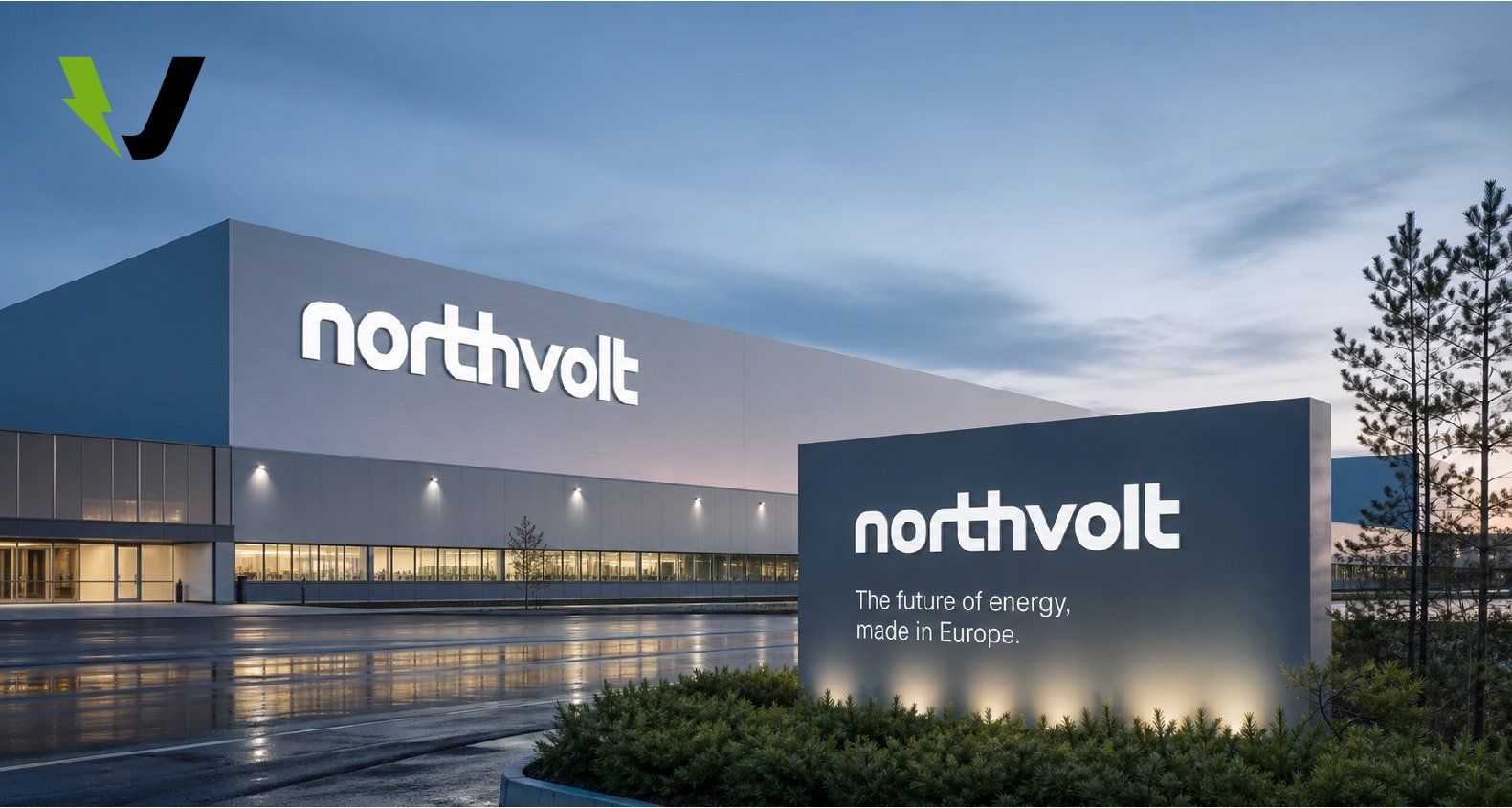
Northvolt was once viewed as one of Europe’s strongest hopes for building a large domestic EV battery industry. Founded in Sweden in 2016, the company attracted major automakers, billions in financing, and ambitious plans for factories across Europe and North America.
That story changed sharply. Northvolt filed for bankruptcy in Sweden on March 12, 2025, after production delays, mounting losses, customer problems, and unsuccessful restructuring efforts. In 2026, many of its former assets are being transferred to new owners, with U.S. battery company Lyten taking over major Swedish and German operations.
Table of Contents
- What Was Northvolt?
- Why Northvolt Became Important to Europe
- What Went Wrong at Northvolt?
- Bankruptcy and the Lyten Acquisition
- What Happened to Northvolt’s Factories?
- What Northvolt Means for Europe’s Battery Industry
- FAQs
- Conclusion
Quick Information
| Detail | Information |
|---|---|
| Founded | 2016 |
| Headquarters | Stockholm, Sweden |
| Main business | Lithium-ion battery cells |
| Flagship factory | Northvolt Ett, Skellefteå |
| Major customers/investors | Volkswagen, BMW, Volvo Cars, Scania |
| 2023 net loss | About $1.2 billion |
| Swedish bankruptcy filing | March 12, 2025 |
| Major asset buyer | Lyten |
| Lyten acquisition completion | February 2026 |
| Former Swedish cell plant | Northvolt Ett |
| Current focus under Lyten | Lithium-ion production initially, broader battery technologies later |
| Northvolt as an independent battery producer | No longer operating in its former form |
What Was Northvolt?
Northvolt was created with the goal of building a large-scale European battery supply chain that could compete with Asian manufacturers.
Its strategy went beyond assembling cells. The company originally planned to control several stages of battery production, including cathode materials, cell manufacturing, battery systems, and recycling.
At its peak, Northvolt had announced or developed projects in:
- Sweden
- Germany
- Canada
- Poland
- Joint ventures with automotive companies
The flagship Northvolt Ett plant in Skellefteå was intended to become a major European source of EV batteries.
Northvolt also secured billions in financing and more than $50 billion in customer orders, according to Reuters reporting from 2024.
Internal linking opportunity: Link this section to articles about European EV battery manufacturing, gigafactories, or battery supply chains.
Why Northvolt Became Important to Europe
Europe depends heavily on Asian battery manufacturers, particularly suppliers from China, South Korea, and Japan.
Northvolt offered European automakers the possibility of sourcing batteries closer to their factories while also reducing supply-chain dependence.
That made the company strategically important to brands including:
- Volkswagen
- BMW
- Volvo Cars
- Scania
Northvolt also promoted lower-carbon battery manufacturing by using European electricity and recycling materials.
Its success was therefore linked not only to electric vehicles but also to broader European industrial policy.
What Went Wrong at Northvolt?
The problems were not caused by one single event.
Northvolt faced a combination of rapid expansion, manufacturing difficulties, high capital requirements, weaker-than-expected demand growth, and delays in reaching stable cell production.
Production delays
The biggest problem was execution at Northvolt Ett.
The factory struggled to ramp up production at the speed expected by customers. Reuters reported that Northvolt was years behind some planned battery deliveries.
BMW contract cancellation
In June 2024, BMW cancelled a battery supply agreement worth around €2 billion.
BMW said the companies had agreed to refocus their cooperation on next-generation battery cells, while reports linked the cancellation to delayed deliveries.
Large financial losses
Northvolt reported a 2023 loss of approximately $1.2 billion, compared with about $285 million in 2022.
That happened while the company was still spending heavily on factories, equipment, workers, and expansion projects.
Expansion became too aggressive
Former CEO Peter Carlsson acknowledged in 2024 that Northvolt had expanded too aggressively.
The company then suspended projects, cut jobs, and focused on trying to stabilize the first 16 GWh phase of Northvolt Ett.
Bankruptcy and the Lyten Acquisition
Northvolt first entered Chapter 11 restructuring in the United States in November 2024.
At that time, the company obtained access to approximately $245 million in financing and attempted to restructure debt while keeping operations running.
The effort was not enough.
On March 12, 2025, Northvolt AB and several Swedish subsidiaries filed for bankruptcy under Swedish law. A court-appointed trustee then took control of the sale of assets and settlement of obligations.
Lyten steps in
In August 2025, U.S. battery company Lyten agreed to acquire Northvolt’s remaining assets in Sweden and Germany, including:
- Northvolt Ett
- Northvolt Ett Expansion
- Northvolt Labs
- Northvolt Drei
- Remaining intellectual property
By February 2026, Reuters reported that Lyten had completed its acquisition of the Swedish assets and planned to restart commercial lithium-ion cell production in Skellefteå during the second half of 2026.
What Happened to Northvolt’s Factories?
The former Northvolt network has been divided among different owners and projects.
Northvolt Ett, Sweden
The Skellefteå plant is now controlled by Lyten.
Lyten plans to restart lithium-ion battery production first, with early focus on energy storage, data centers, and defense because those sectors can be easier to enter than automotive supply.
Automotive battery supply may return later, but Lyten has said qualifying batteries for automakers takes significant time.
Northvolt Labs
The R&D operation in Västerås was also included in Lyten’s acquisition.
This gives Lyten access to Northvolt’s battery-development expertise and intellectual property.
Northvolt Drei, Germany
The planned Heide, Germany battery project was included in the acquisition agreement with Lyten.
Its long-term production strategy now depends on Lyten rather than the former Northvolt organization.
NOVO Energy
Northvolt had jointly owned NOVO Energy with Volvo Cars.
Volvo moved to acquire Northvolt’s stake, and by 2026 operations had been paused while Volvo searched for a new battery-technology partner.
What Northvolt Means for Europe’s Battery Industry
Northvolt’s collapse became a warning about how difficult battery manufacturing is.
Building a gigafactory requires much more than financing and customer contracts. Manufacturers must achieve high production yields, consistent quality, competitive costs, reliable supply chains, and rapid industrial scaling.
Lessons from Northvolt
The main lessons include:
- Battery factories require enormous capital.
- Production ramp-up can take years.
- Automotive customers have strict qualification standards.
- Expanding before the first plant is stable creates risk.
- European manufacturers still face strong Asian competition.
- Government support alone cannot guarantee manufacturing success.
Northvolt’s failure does not mean Europe has abandoned battery production.
Instead, its assets are being reused, and companies such as Lyten are attempting to build on the infrastructure and expertise already created.
FAQs
1. What happened to Northvolt?
Northvolt filed for bankruptcy in Sweden on March 12, 2025 after failing to secure enough funding to continue operations.
2. Does Northvolt still exist?
Not in its former independent form. Its major Swedish and German assets have been sold to Lyten and other parts of the business have been separated or transferred.
3. Who bought Northvolt?
Lyten acquired major Northvolt assets including Northvolt Ett, Northvolt Labs, Northvolt Drei, and intellectual property.
4. Why did BMW cancel its Northvolt deal?
BMW cancelled a roughly €2 billion battery-cell agreement in 2024. Reuters reported that delayed deliveries were a major factor.
5. Will Northvolt’s factory make batteries again?
Lyten said it plans to restart commercial lithium-ion battery-cell production at the former Northvolt Ett site during the second half of 2026, initially focusing on markets such as energy storage.
Conclusion
Northvolt became one of the most ambitious battery companies in Europe, but rapid expansion, production delays, financial losses, and customer setbacks eventually overwhelmed the business. Its March 2025 bankruptcy marked the end of Northvolt as the European battery champion originally envisioned.
Readers can review the original bankruptcy announcement through Northvolt’s official bankruptcy statement, follow the asset transition through Northvolt’s Lyten acquisition announcement, and see the latest ownership developments through Reuters coverage of Lyten’s takeover.
The wider story is not simply one of failure. Northvolt created factories, technology, expertise, and infrastructure that other companies are now trying to reuse. Whether those assets eventually support a competitive European battery industry will depend on whether new owners can solve the production and cost problems that Northvolt could not.
Read more:
