



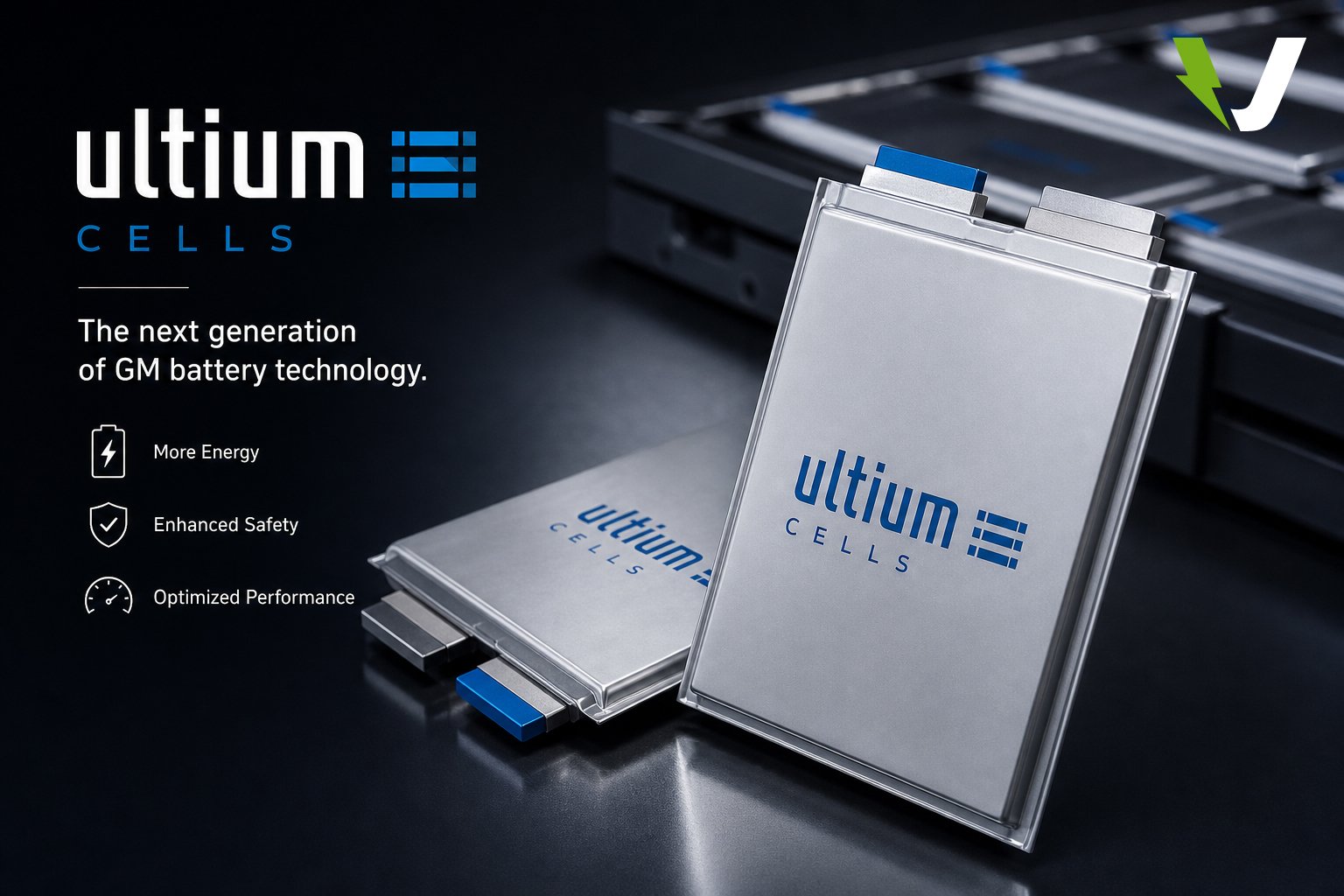
Ultium cells are battery cells produced through General Motors’ battery strategy, most notably by Ultium Cells LLC, the joint venture between GM and LG Energy Solution. These batteries have powered several GM electric vehicles and helped the automaker establish large-scale battery manufacturing in the United States.
The story is changing in 2026. GM no longer treats “Ultium” as a single consumer-facing battery brand and is moving toward multiple chemistries and cell formats. Meanwhile, its Warren, Ohio plant has restarted EV-cell production after a seven-month pause, while the Spring Hill, Tennessee facility is also being adapted to produce LFP cells for energy storage.
Table of Contents
- What Are Ultium Cells?
- Ultium Cell Chemistry and Design
- Warren and Spring Hill Battery Plants
- GM’s Shift Beyond the Ultium Brand
- LFP and Future LMR Battery Technology
- Why Ultium Cells Still Matter
- FAQs
- Conclusion
Quick Information
| Detail | Information |
|---|---|
| Company | Ultium Cells LLC |
| Owners | General Motors and LG Energy Solution |
| Joint venture announced | 2019 |
| Main EV cell format | Large-format pouch |
| Current EV chemistry | High-nickel NCMA |
| Warren plant capacity | More than 45 GWh annually |
| Spring Hill capacity | More than 45 GWh annually |
| Warren production start | 2022 |
| Spring Hill production start | 2024 |
| New Spring Hill chemistry | LFP for energy storage |
| Future GM/LG chemistry | LMR |
| Future LMR format | Prismatic |
| Planned LMR production | 2028 |
What Are Ultium Cells?
Ultium cells are lithium-ion battery cells manufactured through the GM-LG Energy Solution partnership.
The first major Ultium Cells factory was built in Warren, Ohio. Production began there in August 2022, and the facility was designed for more than 45 GWh of annual capacity. The plant produces large-format pouch cells using nickel-cobalt-manganese-aluminum, or NCMA, chemistry.
These cells have been used across GM’s EV portfolio, including models built on the company’s flexible EV architecture.
Typical applications have included:
- Chevrolet Silverado EV
- GMC Hummer EV
- Cadillac Lyriq
- Chevrolet Blazer EV
- Chevrolet Equinox EV
- Cadillac Vistiq and related models
The exact battery arrangement differs by vehicle because GM can combine modules and packs according to range, performance, and vehicle size.
Internal linking opportunity: Link this section to articles about GM EV batteries, Chevrolet Silverado EV range, or EV battery chemistry.
Ultium Cell Chemistry and Design
Current Ultium EV cells have primarily used high-nickel NCMA chemistry.
NCMA stands for nickel, cobalt, manganese, and aluminum. High nickel content helps provide strong energy density, making the chemistry useful for long-range EVs and larger vehicles.
GM has also emphasized modular pack design.
Instead of creating a completely separate battery architecture for every model, its EV platform was designed to use common cell and module technologies across multiple vehicles.
Why pouch cells?
Large pouch cells offer several advantages:
- High packaging efficiency
- Flexible module layouts
- Fewer individual cells than small cylindrical designs
- Strong energy density
- Adaptability across vehicle sizes
However, GM is no longer committed to pouch cells alone.
The company is now deliberately adding prismatic cells and multiple chemistries so it can choose a lower-cost or higher-energy solution depending on the vehicle.
Warren and Spring Hill Battery Plants
Ultium Cells operates two important GM-LG facilities in Ohio and Tennessee.
Warren, Ohio
The Warren facility has more than 45 GWh of annual capacity and achieved a major milestone in December 2024 when GM announced production of its 100 millionth battery cell there.
Production was paused in January 2026 because of weaker EV demand.
Reuters reported in August 2026 that production was restarting after the seven-month shutdown, with around 1,400 employees expected to be working at the plant as operations resumed.
Spring Hill, Tennessee
The Spring Hill plant began production in February 2024 and was also designed for more than 45 GWh annually. It originally focused on pouch cells for GM electric vehicles.
In 2026, its role expanded significantly.
Ultium Cells announced that Spring Hill would produce LFP batteries for energy-storage systems, reflecting increased demand from grid storage and AI data-center infrastructure as EV demand developed more slowly than previously expected.
GM’s Shift Beyond the Ultium Brand
One important point is that Ultium Cells LLC still exists, even though GM has moved away from using “Ultium” as the umbrella brand for all of its EV battery technology.
GM began dropping the Ultium branding in 2024 as it adopted a more flexible battery strategy involving multiple chemistries, suppliers, and form factors.
That means two ideas should not be confused:
Ultium brand: No longer GM’s universal marketing name for every battery technology.
Ultium Cells LLC: The active GM-LG Energy Solution manufacturing joint venture.
GM has also reduced its involvement in some planned facilities. It agreed to sell its stake in the Lansing, Michigan Ultium battery plant to LG Energy Solution, while keeping its ownership in the overall Ultium Cells joint venture and its Warren and Spring Hill operations.
LFP and Future LMR Battery Technology
GM’s future battery strategy is becoming more chemistry-specific.
LFP batteries
Lithium iron phosphate, or LFP, generally offers:
- Lower material cost
- Strong durability
- Good thermal stability
- Reduced reliance on nickel and cobalt
Its disadvantage is lower energy density compared with high-nickel chemistries.
GM has said LFP can help reduce battery pack cost significantly in selected vehicles. Spring Hill is now also using LFP production for stationary energy-storage applications.
LMR batteries
The more ambitious future technology is LMR, meaning lithium manganese-rich.
GM and LG Energy Solution announced plans to commercialize LMR prismatic cells through Ultium Cells beginning in 2028. Pre-production is expected earlier, in late 2027.
GM claims the new LMR cells can provide around 33% higher energy density than its best-performing LFP cells at comparable cost.
The company plans to use these cells in electric trucks and large SUVs, where high range and lower pack cost are especially valuable.
Why Ultium Cells Still Matter
Despite slower EV demand and changes in GM’s branding, Ultium Cells remains strategically important.
The joint venture gives GM access to large-scale domestic battery production while allowing LG Energy Solution to use its cell-manufacturing expertise in North America.
Main advantages
- U.S.-based production
- More than 90 GWh combined nominal capacity across Warren and Spring Hill
- Large-scale pouch-cell manufacturing
- Multiple future chemistries
- Lower supply-chain dependence
- Integration with GM vehicle production
Main challenges
- EV demand has been uneven
- Large battery factories are expensive to operate
- Plants may need to serve both EV and stationary-storage markets
- Battery chemistry is changing quickly
- Chinese manufacturers remain strong on cost, especially in LFP
The 2026 production pause in Ohio illustrates that battery factories must adapt to actual vehicle demand rather than simply maximizing output.
FAQs
1. Who makes Ultium cells?
Ultium Cells LLC is a joint venture between General Motors and LG Energy Solution. It manufactures battery cells in the United States.
2. What chemistry do Ultium cells use?
Current GM EV cells primarily use high-nickel NCMA chemistry, while future production is expanding to include LFP and LMR chemistries.
3. Is GM still using the Ultium name?
GM has moved away from using Ultium as the universal brand for its battery strategy, but Ultium Cells LLC remains an active GM-LG joint venture.
4. Where are Ultium cells made?
Major joint-venture production facilities are located in Warren, Ohio and Spring Hill, Tennessee. Both were designed for more than 45 GWh of annual capacity.
5. What are GM’s next-generation battery cells?
GM and LG plan to begin commercial production of LMR prismatic cells in 2028 for future electric trucks and large SUVs.
Conclusion
Ultium cells remain an important part of GM’s EV manufacturing strategy, even though the company now uses a broader battery approach instead of treating Ultium as one universal technology.
The latest developments show a more flexible system: Warren is returning to EV-cell production, Spring Hill is expanding into LFP energy-storage batteries, and future LMR prismatic cells are planned for 2028.
For authoritative information, readers can explore Ultium Cells’ Warren manufacturing site, review General Motors’ LMR battery announcement, and follow current battery technology through GM News.
The most important trend is diversification. Instead of relying on one cell chemistry and one physical format, GM and LG are positioning Ultium cells within a broader battery portfolio designed to balance range, cost, durability, manufacturing scale, and changing market demand.
Read more:
