



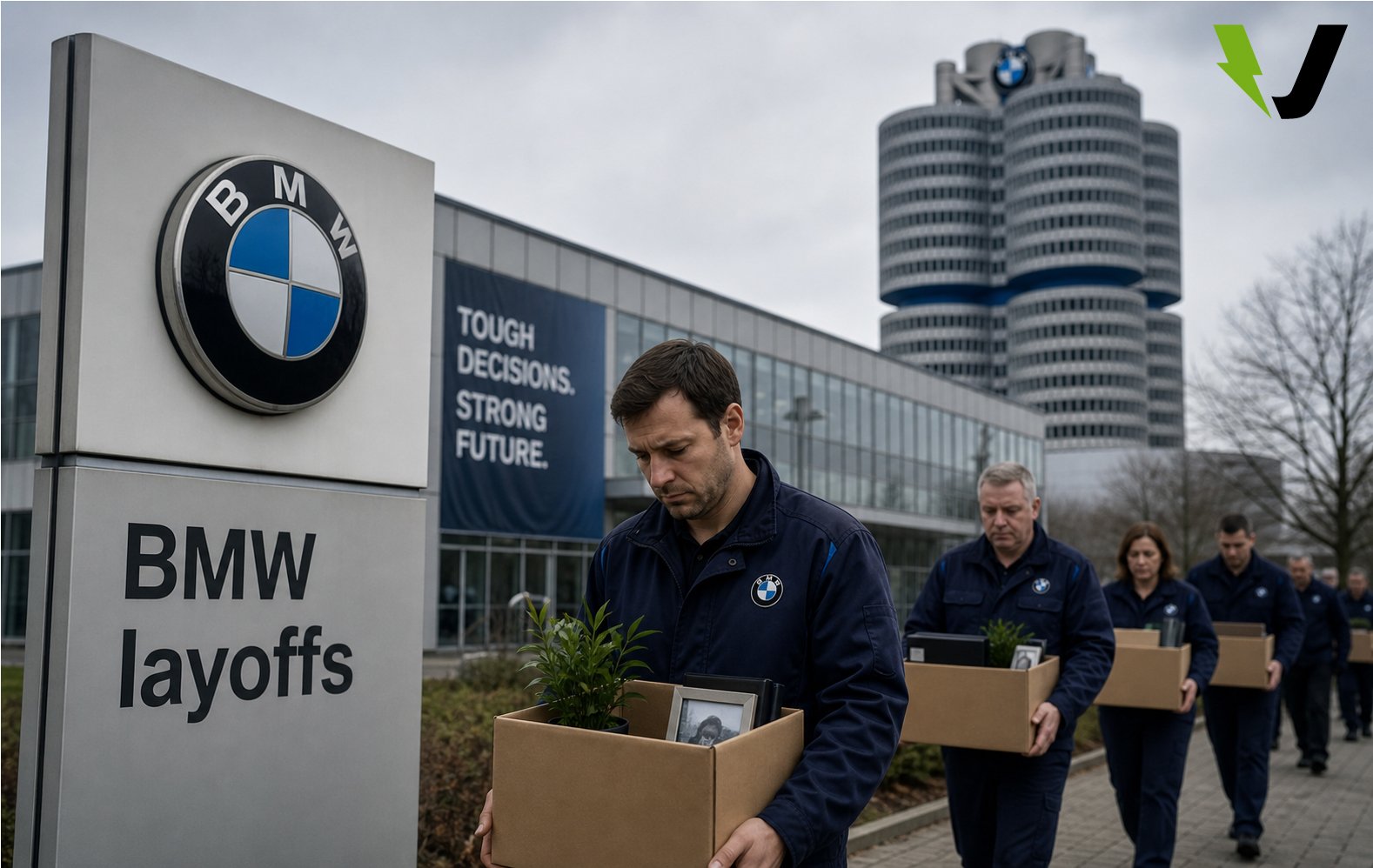
The latest BMW layoffs story centers on a major workforce restructuring announced in July 2026. BMW plans to reduce approximately 8,000 jobs worldwide by the end of 2027, with a large share of the reductions expected in Germany. However, BMW is emphasizing voluntary severance and natural attrition rather than mass compulsory dismissals.
The cuts come as BMW faces weaker profitability, especially heavy pressure in China, while investing in electric vehicles, software, Neue Klasse models, batteries, and new manufacturing systems. BMW’s own management has described the restructuring as an effort to make the organization leaner, faster, and more effective.
Table of Contents
- What Are the BMW Layoffs?
- Which Jobs Are Affected?
- Why Is BMW Cutting Jobs?
- China, EV Competition and Profit Pressure
- How BMW Plans to Reduce Its Workforce
- What the Layoffs Mean for BMW’s Future
- FAQs
- Conclusion
Quick Information
| Detail | Current Information |
|---|---|
| Planned job reductions | Around 8,000 worldwide |
| Target completion | End of 2027 |
| Announcement | July 2026 |
| BMW workforce at end of 2025 | 154,540 employees |
| Germany workforce affected | At least around 4,000 expected |
| Main areas affected | Office, development, research, planning, management |
| Production workers | Generally not the main target |
| Main method | Voluntary severance + natural attrition |
| Q2 2026 pretax profit change | Down about 35% |
| Q2 China sales change | Down 30.2% YoY |
| Main goal | Lower costs and improve efficiency |
BMW employed 154,540 people at the end of 2025, down from 157,457 one year earlier.
What Are the BMW Layoffs?
The current BMW layoffs are part of a global restructuring program aimed at reducing approximately 8,000 positions by the end of 2027.
Reuters reported that BMW will use a voluntary redundancy program as the company reviews operations across sales, purchasing, production, and development. The plan emerged after BMW reported a roughly 35% decline in second-quarter 2026 pretax profit to €1.7 billion.
BMW management has confirmed that an agreement was reached with the General Works Council on a workforce restructuring program in Germany. The company specifically described a voluntary severance program for indirect functions.
This distinction matters. The program is more accurately described as workforce restructuring and job reduction rather than a simple immediate mass layoff.
Internal linking opportunity: Link this section to articles about German automotive job cuts, BMW Neue Klasse, or EV industry restructuring.
Which Jobs Are Affected?
The reductions are expected to focus mainly on non-production roles.
Eurofound lists the affected areas as including:
- Administration
- Research
- Development
- Planning
- Management
- Other indirect functions
Production workers are currently expected to be less affected than office-based and indirect positions.
At least half of the 8,000 expected reductions may occur in Germany, meaning roughly 4,000 or more German positions could disappear.
German reports also indicate that around 40,000 employees may receive individual voluntary severance offers, although that does not mean 40,000 jobs will be eliminated. The final number depends on how many workers accept offers and how much headcount falls through natural turnover.
Why Is BMW Cutting Jobs?
BMW is responding to several pressures at the same time.
The company is dealing with:
- Weaker earnings
- Slower demand in China
- Stronger Chinese automotive competitors
- U.S. trade and tariff uncertainty
- Heavy EV investment requirements
- Software-development costs
- Changing customer demand
- Need for simpler internal structures
BMW Chairman Milan Nedeljković said the company wants to make its organization leaner to improve speed and effectiveness. BMW is reviewing areas including customer processes, organizational structures, purchasing, engineering, and delivery.
The company is therefore not only reducing headcount. It is also changing how work is organized.
China, EV Competition and Profit Pressure
China is one of the largest reasons the situation became more urgent.
BMW reported that retail sales in China fell 30.2% year over year during Q2 2026. Sales during the first half of the year were down 20.4%.
The Chinese premium market has become extremely competitive.
BMW now competes not only with Mercedes-Benz and Audi but with fast-growing Chinese manufacturers offering:
- Lower-priced EVs
- Advanced infotainment
- Fast charging
- Strong software integration
- Frequent model updates
Profitability has also weakened
BMW’s 2025 revenue declined 6.3% to €133.45 billion, while the Automotive EBIT margin fell from 6.3% to 5.3%.
Conditions weakened further during 2026.
BMW now expects its 2026 Automotive EBIT margin to fall within 1% to 3%, and the workforce restructuring itself could reduce the margin by up to 1.25 percentage points because severance costs must initially be recognized.
This means BMW is spending money now in an attempt to create lower operating costs later.
How BMW Plans to Reduce Its Workforce
BMW’s approach differs from abrupt factory closures or broad compulsory dismissals.
The main tools are expected to include:
Voluntary severance
Eligible employees can receive compensation for leaving voluntarily.
Natural attrition
Some positions may disappear when employees retire or leave normally, without direct replacement.
Reduced indirect staffing
The program focuses heavily on office and administrative functions rather than immediately removing factory workers.
Organizational simplification
BMW wants fewer layers and faster decision-making.
The company has reached an agreement with employee representatives in Germany, which reduces the likelihood of a highly confrontational restructuring process.
The cuts are expected to begin during 2026 and continue through the end of 2027.
What the Layoffs Mean for BMW’s Future
The BMW layoffs do not mean the company is abandoning growth or electric vehicles.
BMW is simultaneously investing heavily in its Neue Klasse generation, new battery technology, software architecture, and EV production.
This creates an unusual situation: BMW can reduce jobs in some established functions while hiring or investing in newer technology areas.
For example, BMW has continued building new manufacturing capacity and technology operations while cutting positions elsewhere. The broader strategy appears to be shifting resources toward future products rather than reducing the company evenly across every department.
Possible benefits
- Lower long-term operating costs
- Faster decision-making
- More resources for EV technology
- Improved competitiveness
- Leaner organization
Main risks
- Loss of experienced employees
- Lower staff morale
- High short-term severance costs
- Continued weakness in China
- Uncertain EV demand
- Strong competition from Chinese automakers
The success of the restructuring will depend on whether BMW can protect engineering and product-development capability while reducing bureaucracy.
FAQs
1. How many jobs is BMW cutting?
BMW plans to reduce approximately 8,000 positions worldwide by the end of 2027.
2. Are the BMW layoffs happening in Germany?
Yes. At least roughly half of the reductions are expected to affect Germany, meaning around 4,000 or more positions could be removed there.
3. Are BMW factory workers being laid off?
The current restructuring primarily targets indirect functions such as administration, development, research, planning, and management rather than production workers.
4. Why is BMW cutting jobs?
BMW is responding to lower profitability, weak Chinese demand, rising competition, tariffs, and the need to make its organization faster and more efficient.
5. Are the BMW layoffs compulsory?
BMW is currently emphasizing voluntary severance and natural attrition. The confirmed German program is designed around voluntary measures rather than a broad compulsory redundancy program.
Conclusion
The BMW layoffs represent one of the company’s largest workforce adjustments in recent years. Around 8,000 positions are expected to disappear by the end of 2027, with Germany carrying a significant share of the reductions. However, BMW is relying heavily on voluntary severance and natural attrition rather than immediate compulsory dismissals.
For official financial and restructuring context, readers can review BMW Group’s Q2 2026 management statement, examine current financial guidance through BMW Group’s Q2 2026 finance update, and compare workforce figures through BMW Group Report 2025.
The bigger issue behind the BMW layoffs is competitiveness. BMW must fund EVs, software, batteries, and Neue Klasse technology while responding to weaker margins and intense Chinese competition. Whether the restructuring succeeds will depend on BMW cutting structural costs without weakening the engineering expertise that supports its premium-market position.
Read more:
