



Dernière mise à jour: August 20, 2026
The Denza Z9 is a large luxury electrified sedan from Denza, BYD’s premium automotive brand. It combines high-performance electric drive, advanced battery technology, luxury features, connected-car systems, and driver-assistance technology.
Buyers can choose between a fully electric Denza Z9 EV and a plug-in hybrid version. The EV uses BYD’s Blade Battery technology and an 800V electrical architecture, while both versions use Denza’s advanced Yi San Fang vehicle-control system.
Table of Contents
- What Is the Denza Z9?
- Denza Z9 Performance and Powertrain
- Battery, Range and Charging
- Connected-Car and AI Technology
- Interior, Comfort and Practicality
- Denza Z9 Price, Advantages and Disadvantages
- FAQs and Conclusion
Quick Information
| Specification | Denza Z9 EV |
|---|---|
| Vehicle type | Luxury electric sedan |
| Length | 5,220 mm |
| Wheelbase | 3,125 mm |
| Battery | 100 kWh Blade Battery |
| Electric range | 630 km CLTC |
| Maximum DC charging | 270 kW |
| Charging time | 30–80% in about 19 minutes |
| Drive system | Three-motor AWD |
| Combined torque | 1,150 Nm |
| 0–100 km/h | 3.4 seconds |
| Electrical architecture | 800V |
| Starting listed EV price | RMB 354,800 |
| Infotainment | DiLink 150 |
Specifications refer to the currently listed China-market version and can differ by trim or future model year.
What Is the Denza Z9?
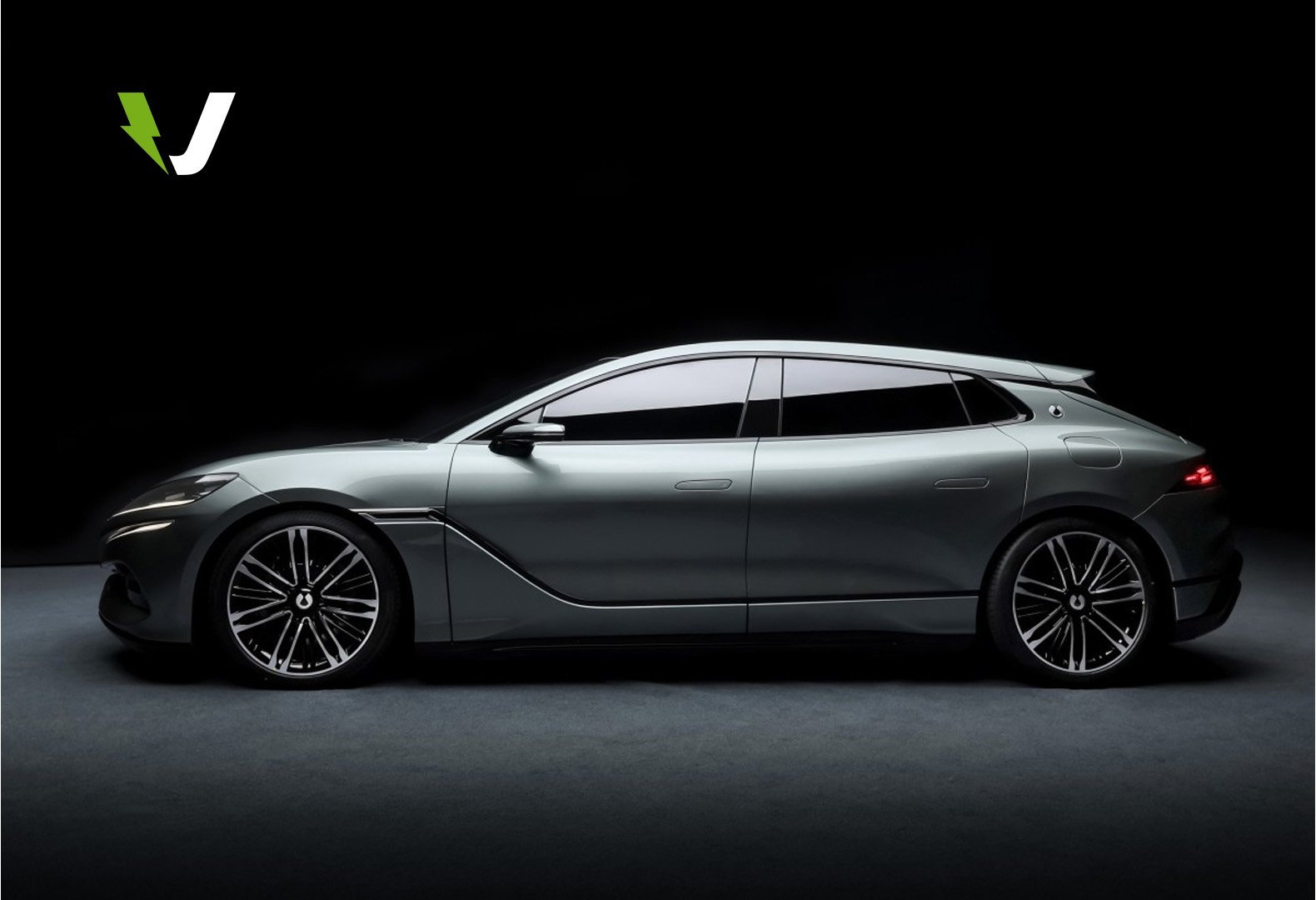
The Denza Z9 is positioned as a premium full-size sedan with a length of more than 5.2 meters. It sits alongside the Z9 GT, but the two cars should not be confused: the Z9 is a traditional luxury sedan, while the Z9 GT uses a sportier fastback or shooting-brake-style body.
According to Denza official Denza Z9 page, the model is available with both pure-electric and plug-in-hybrid powertrains. The company emphasizes luxury comfort, advanced chassis control, electrification, and intelligent driving technology.
Internal linking opportunity: Link this section to articles explaining BYD Blade Battery technology, 800V EV charging, or Denza vs BYD.
Denza Z9 Performance and Powertrain
The current Denza Z9 EV uses three electric motors. The front motor produces up to 230 kW, while two rear motors can each produce up to 240 kW, creating an electronically controlled all-wheel-drive system.
Denza lists combined torque at 1,150 Nm and a claimed 0–100 km/h time of 3.4 seconds. This puts the Z9 firmly in performance-car territory despite its large luxury-sedan size.
Yi San Fang chassis technology
One of the Z9’s most interesting technologies is Denza’s Yi San Fang platform. Independent control of its electric motors allows the system to manage wheel torque more precisely than a conventional drivetrain.
This enables unusual functions such as up to 15-degree crab walking, a very tight 4.62-meter turning radius, controlled pivot-style turns, and stability assistance during difficult road conditions.
Denza Z9 Battery, Range and Charging
The EV uses a 100 kWh BYD Blade Battery, based on lithium iron phosphate chemistry. Denza claims a 630 km CLTC range, although real-world range may be lower because CLTC testing tends to produce optimistic figures compared with everyday highway driving.
The vehicle supports an 800V high-voltage platform and up to 270 kW DC fast charging. Denza states that charging from 30% to 80% takes about 19 minutes under suitable conditions.
The car also includes battery heating and thermal-management systems, a heat-pump climate system, regenerative braking, 7 kW AC charging, and up to 6 kW vehicle-to-load capability.
EV vs plug-in hybrid
The plug-in hybrid Z9 uses a smaller battery alongside a gasoline engine. Denza lists up to 201 km CLTC electric range and up to 1,101 km combined CLTC range for the hybrid version.
This gives buyers two approaches: the EV favors fully electric driving, while the PHEV may be more practical where reliable fast-charging infrastructure is limited.
Connected-Car and AI Technology
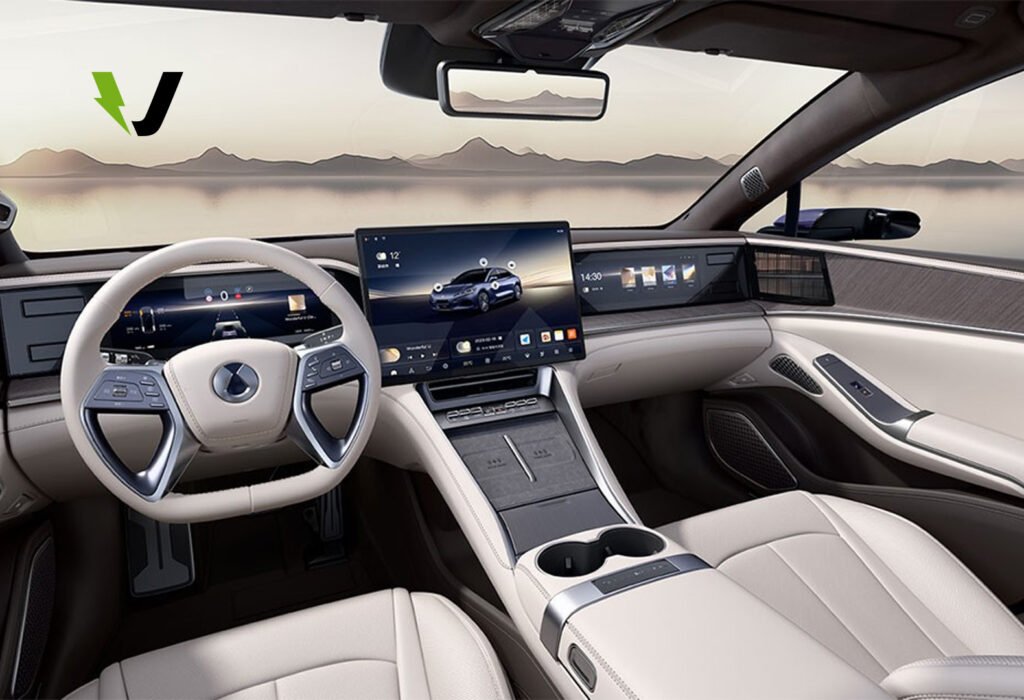
The Denza Z9 is also a connected vehicle. Its DiLink 150 digital cockpit includes a 17.3-inch central display, a 13.2-inch digital instrument cluster, and a separate 13.2-inch passenger display.
Voice control supports multiple seating zones and continuous conversation. Denza also lists AI-related functions including large-language-model interaction, an AI agent, travel assistance, and other connected services, although some features can depend on software availability and regional support.
Driver assistance
The Z9 is offered with advanced driver-assistance features and sensor hardware that can include dual 128-line LiDAR units. Denza advertises highway navigation assistance, urban navigation assistance, automated parking, and narrow-space parking functions.
These remain driver-assistance systems rather than fully autonomous driving. Drivers must remain responsible for the vehicle and follow local laws.
Interior, Comfort and Practicality
The Z9 is designed as an executive luxury sedan. Rear passengers receive electrically adjustable seats with heating, ventilation, massage functions, and reclining settings, depending on specification.
Other features include multiple 50W wireless charging pads, four-zone climate control, a 20-speaker Devialet audio system, soft-close doors, privacy glass, and active cabin air-quality technology.
Practical example
Consider a driver covering a 400 km intercity journey. The 630 km CLTC rating suggests that the Z9 EV may theoretically complete the trip without charging, although temperature, highway speed, climate-control use, and driving style will affect actual range.
If charging is needed, access to a sufficiently powerful DC charger allows the car to take advantage of its 270 kW charging capability. A slower public charger would reduce that benefit.
Denza Z9 Price, Advantages and Disadvantages
Denza currently lists the 630 AWD Pro EV at RMB 354,800 in China. Pricing outside China can differ substantially because of taxes, import duties, equipment differences, and local distribution costs.
The Z9 therefore competes more on technology and performance than simply being a low-cost electric car.
Advantages
- Powerful three-motor AWD system
- 100 kWh Blade Battery
- 800V architecture
- Up to 270 kW DC charging
- Premium rear-seat comfort
- Advanced chassis functions
- Extensive infotainment and connected technology
Disadvantages
- Very large and heavy vehicle
- CLTC range is not equal to real-world range
- Fast charging depends on compatible infrastructure
- Advanced connected features may vary by region
- International pricing and availability remain market-dependent
FAQs
1. Is the Denza Z9 fully electric?
Yes, the Denza Z9 is available as a full battery-electric vehicle. A plug-in hybrid version is also offered in China.
2. What is the Denza Z9 EV range?
Denza lists 630 km of CLTC range for the currently advertised 100 kWh electric version. Actual driving range will vary.
3. How fast can the Denza Z9 charge?
The EV supports up to 270 kW DC charging, with a claimed 30–80% charging time of around 19 minutes under suitable conditions.
4. How fast is the Denza Z9?
The electric Z9 can accelerate from 0 to 100 km/h in 3.4 seconds, according to Denza’s official specifications.
5. Is the Denza Z9 the same as the Z9 GT?
No. They share technology and branding, but the Z9 is a luxury sedan while the Z9 GT uses a more practical performance-oriented liftback body.
Conclusion
The Denza Z9 shows how quickly premium Chinese electric vehicles are advancing in battery systems, connected software, charging speed, and chassis technology. Its 100 kWh Blade Battery, 800V architecture, three-motor drivetrain, and sophisticated digital cockpit make it one of Denza’s most technology-focused models.
Readers can verify technical details through Denza official Denza Z9 specifications, learn more about the company through BYD BYD global website, and follow industry developments through CarNewsChina Denza Z9 coverage.
For buyers considering the Denza Z9, the biggest questions are likely to be local availability, charging infrastructure, real-world range, and how its connected features will operate outside China.
Read More:
