


Dernière mise à jour: August 20, 2026
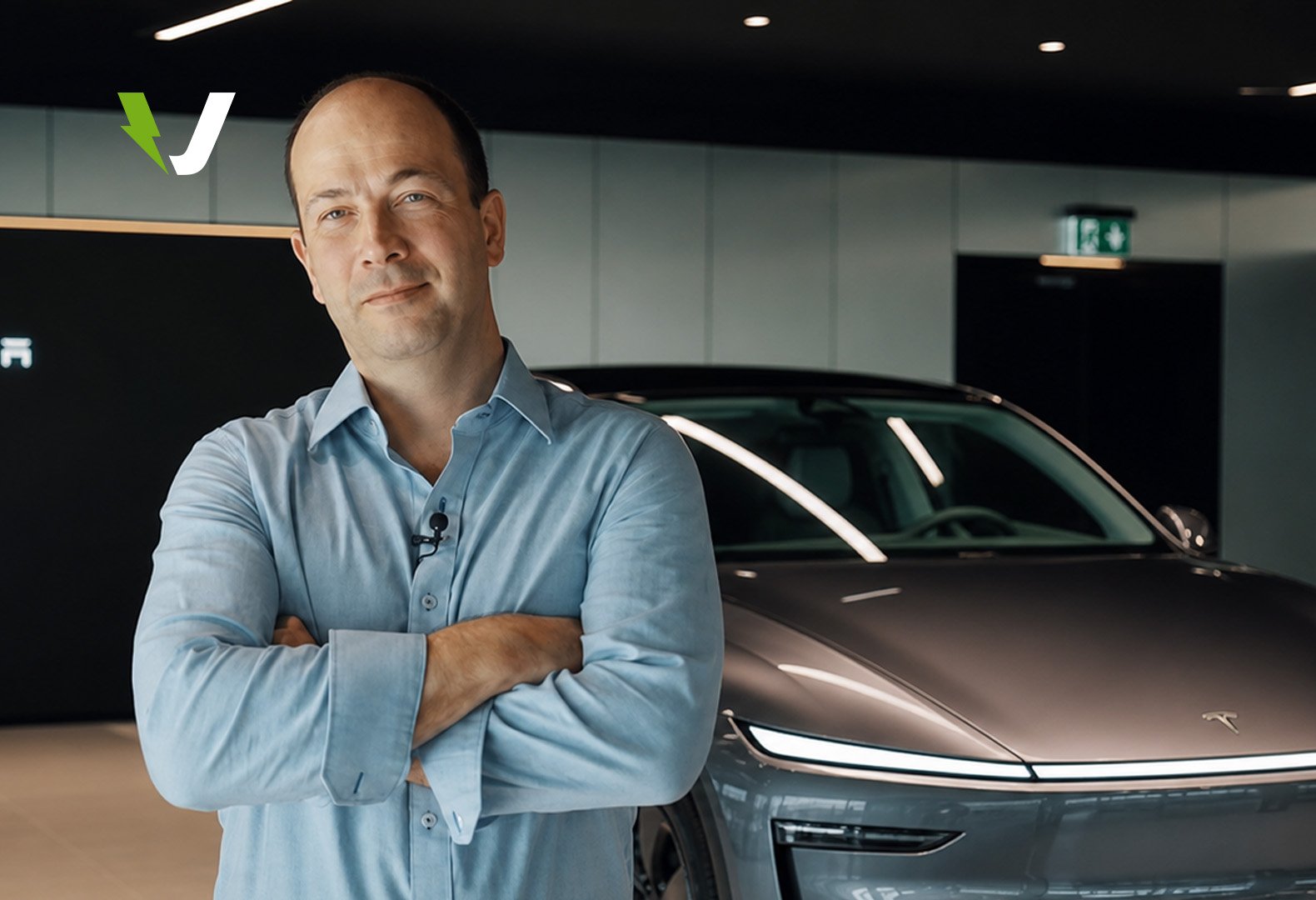
Lars Moravy is Tesla’s Vice President of Vehicle Engineering and one of the senior engineers behind the company’s modern electric vehicles. His work covers areas such as vehicle structures, chassis systems, thermal engineering, safety, testing, and production-ready hardware.
Unlike executives mainly associated with business strategy, Moravy regularly discusses the engineering decisions behind Tesla vehicles. His public work provides useful insight into how Tesla approaches EV design, from Model Y efficiency to Cybertruck construction and real-world safety engineering.
Table of Contents
- Who Is Lars Moravy?
- Lars Moravy’s Career Before and at Tesla
- His Role in Tesla Vehicle Engineering
- Model Y and First-Principles Engineering
- Cybertruck, Safety and New Vehicle Technology
- Why Lars Moravy Matters to the EV Industry
- FAQs
- Conclusion
Quick Information
| Detail | Information |
|---|---|
| Full name | Lars Moravy |
| Company | Tesla |
| Current role | Vice President, Vehicle Engineering |
| Industry | Electric vehicles and automotive technology |
| Engineering background | Mechanical and vehicle engineering |
| Previous employer | Honda R&D |
| Tesla career | Joined in 2010 |
| Key areas | Chassis, vehicle structures, testing, thermal systems |
| Known vehicle programs | Model 3, Model Y, Cybertruck and other Tesla vehicles |
| Education | Northwestern University |
| Current status | Tesla executive as of August 2026 |
Who Is Lars Moravy?
Lars Moravy is an automotive engineer currently serving as Vice President of Vehicle Engineering at Tesla. Tesla itself identifies him by this title in its technical material, including guidance explaining how tires affect EV performance, comfort, safety, and efficiency.
His role is important because vehicle engineering connects many systems that drivers experience every day. Suspension, body structure, battery packaging, thermal management, tires, interior components, crash performance, and manufacturing all need to work together rather than as separate technologies.
Moravy has also become one of Tesla’s more visible engineering leaders, appearing in technical discussions and videos explaining why the company makes certain vehicle-design decisions.
Lars Moravy’s Career Before and at Tesla
Moravy studied at Northwestern University and has a mechanical-engineering background. His professional record shows that before Tesla, he worked at Honda R&D on chassis and suspension engineering.
He joined Tesla in 2010 and moved through increasingly senior engineering positions. His earlier responsibilities included suspension, steering, wheels, tires, chassis dynamics, vehicle testing, noise and vibration, and product-lifecycle engineering.
From chassis engineer to engineering executive
That progression is significant because Moravy did not enter Tesla primarily as a corporate manager. His career developed through hands-on vehicle engineering and technical leadership.
Public patent records associated with his professional profile include work relating to vehicle suspension, dampers, ball joints, and a vehicle exoskeleton. This background helps explain why his public comments frequently focus on physical engineering rather than only software.
Internal linking opportunity: Link this section to articles about Tesla engineering, EV suspension technology, or how electric-car chassis differ from gasoline vehicles.
Lars Moravy’s Role in Tesla Vehicle Engineering
As Vice President of Vehicle Engineering, Lars Moravy works across the physical systems that make Tesla vehicles function as complete products.
Modern EV engineering requires several disciplines to interact:
- Body and structural engineering
- Suspension and steering
- Battery integration
- Thermal management
- Interior and exterior systems
- Vehicle testing and validation
- Noise and vibration control
- Safety engineering
- Manufacturing integration
Tesla’s design approach increasingly integrates hardware and software. For example, the company says its safety engineering uses anonymous data from millions of vehicles to understand real-world crashes and apply lessons to vehicle systems.
This creates a different engineering environment from older vehicles where many systems were developed more independently.
Model Y and First-Principles Engineering
One of Moravy’s clearest explanations of Tesla engineering concerns the Model Y. In Tesla material, he describes a “first-principles” approach where engineers question existing assumptions and work from basic physics and mechanical requirements.
For Model Y, this approach involved balancing range, handling, storage, comfort, and SUV capability. Moravy discussed features such as brake-based torque control that can help maintain traction when a wheel loses contact or grip.
What first principles means in practice
Instead of asking, “How has the industry always built this component?”, engineers can ask:
- What must the component actually do?
- What physical forces affect it?
- Can parts be removed or combined?
- Can manufacturing be simplified?
- Can weight be reduced without compromising safety?
This approach can improve efficiency and reduce complexity, but it also creates risks. Unconventional designs may require extensive testing, new manufacturing processes, or changes to established repair methods.
Cybertruck, Safety and New Vehicle Technology
Moravy’s engineering background is also relevant to the Tesla Cybertruck, particularly because the truck uses an unconventional stainless-steel exterior structure and vehicle architecture.
His published professional record includes a patent titled “Vehicle with Exoskeleton,” published in 2021. The patent concerns vehicle structural concepts and is commonly associated with Tesla’s work on alternative body construction.
Real-world safety engineering
Safety is another important area where hardware and data increasingly overlap. [Tesla] Tesla Safety says its global vehicle fleet generates anonymous real-world driving information that can help engineers understand accidents and improve safety systems.
The company also uses structural battery packs, crumple zones, reinforced passenger compartments, advanced airbags, and software-controlled active-safety systems.
A practical example is crash development. Instead of relying only on standardized laboratory tests, engineers can study patterns from actual collisions and recreate relevant scenarios during testing. Tesla says those findings can influence both vehicle engineering and software updates.
EV Efficiency, Thermal Systems and Tires
EV range is not determined only by battery size. Aerodynamics, tire resistance, vehicle weight, heating and cooling, drivetrain efficiency, and software all affect how much energy a vehicle consumes.
Moravy has publicly highlighted the importance of tire engineering. [Tesla] Tesla-Approved Tires quotes him describing tires as particularly important because they must simultaneously deliver comfort, quietness, safety, durability, and road grip.
Tesla consequently uses its own approval markings, such as T0, T1, and later versions, for tires engineered around specific vehicle requirements.
Thermal efficiency
Thermal management is equally important in EVs. Tesla’s heat-pump system moves heat between different parts of the vehicle rather than simply creating heat with resistive elements.
Moravy has highlighted Tesla’s heat-pump engineering publicly, noting how heat can be moved toward systems that need it. This becomes especially valuable in cold weather, where cabin heating and battery temperature can significantly affect EV efficiency.
Why Lars Moravy Matters to the EV Industry
Moravy represents an important shift in automotive engineering. Electric vehicles are no longer simply gasoline cars with engines replaced by batteries and motors.
EV designers can rethink vehicle structures, thermal systems, suspension tuning, battery placement, software integration, manufacturing, and even how safety improvements are developed after vehicles reach customers.
Advantages of Tesla’s integrated approach
- Hardware and software can be developed together.
- Real-world data can influence future engineering.
- EV-specific components can improve energy efficiency.
- Fewer parts may simplify manufacturing.
- Over-the-air updates can improve some vehicle functions.
Potential disadvantages
- Highly integrated designs may be harder to repair.
- New manufacturing methods require significant investment.
- Software dependence introduces cybersecurity considerations.
- Unconventional engineering requires extensive validation.
- Hardware changes cannot always be delivered through software updates.
Moravy’s work therefore illustrates how the modern automotive engineer increasingly operates across mechanical, electrical, software, manufacturing, and data-driven disciplines.
FAQs
1. Who is Lars Moravy?
Lars Moravy is Tesla’s Vice President of Vehicle Engineering and an automotive engineer involved in the development and engineering of Tesla vehicles.
2. Does Lars Moravy still work at Tesla?
Yes. Current Tesla material continues to identify Lars Moravy as Vice President of Vehicle Engineering as of 2026.
3. Where did Lars Moravy work before Tesla?
Moravy worked at Honda R&D before joining Tesla. His earlier engineering career focused heavily on suspension and chassis development.
4. What cars has Lars Moravy worked on?
His Tesla career has been associated with vehicle programs including Model S, Model 3, Model Y, Cybertruck, and other Tesla projects, although individual engineering contributions vary by program.
5. What is Lars Moravy’s engineering philosophy?
Moravy has publicly discussed Tesla’s use of first-principles engineering, which means reconsidering assumptions and developing solutions from fundamental physical and mechanical requirements.
Conclusion
Lars Moravy is an important figure in Tesla’s vehicle-development organization because his work sits where traditional automotive engineering meets batteries, data, software, and advanced manufacturing.
Readers can explore his current engineering role through [Tesla] Tesla’s official website, review the company’s data-driven approach through [Tesla Safety] Tesla Safety, and examine his professional engineering background through [Lars Moravy’s LinkedIn profile] Lars Moravy on LinkedIn.
For anyone researching Lars Moravy, his significance goes beyond one Tesla model. His career demonstrates how EV development increasingly combines chassis engineering, vehicle structures, thermal management, manufacturing, connected data, and software into one integrated engineering process.
Read More:
