



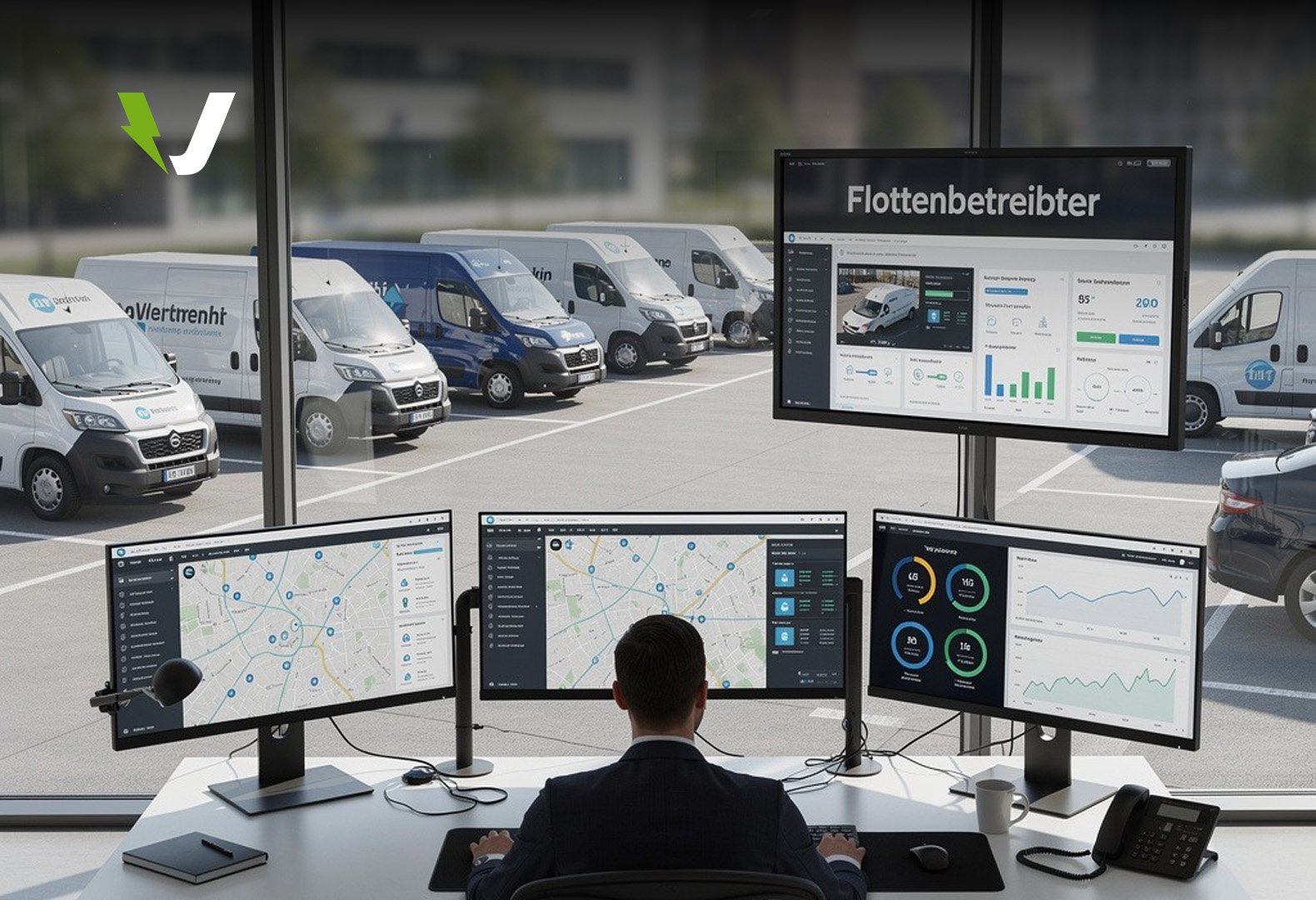
A Flottenbetreiber is a company or organization that operates and manages a fleet of vehicles for business purposes. In English, the closest terms are fleet operator or, depending on context, corporate fleet operator.
A Flottenbetreiber may manage company cars, delivery vans, trucks, service vehicles, buses, or electric vehicles. The role is becoming more technology-driven as telematics, EV charging, fleet software, AI, and European emissions rules reshape commercial transportation.
Table of Contents
- What Does Flottenbetreiber Mean?
- Main Responsibilities of a Fleet Operator
- EV Fleet Electrification and Charging
- Telematics, Software and Automotive SaaS
- Costs, TCO and Fleet KPIs
- EU Regulation and Corporate Fleet Trends
- FAQs
- Conclusion
Quick Information
| Detail | Explanation |
|---|---|
| German term | Flottenbetreiber |
| English meaning | Fleet operator |
| Typical vehicles | Cars, vans, trucks, buses and EVs |
| Main responsibility | Efficient and safe fleet operation |
| Key technologies | Telematics, GPS, SaaS, charging software |
| EV considerations | Range, charging, battery state and energy cost |
| Important metric | Total Cost of Ownership |
| Regulatory area | Safety, emissions, working time and charging |
| Current trend | Fleet electrification |
What Does Flottenbetreiber Mean?
The German word Flottenbetreiber combines Flotte, meaning fleet, and Betreiber, meaning operator. It normally describes a business, public authority, logistics company, leasing operation, or other organization responsible for operating multiple vehicles.
A Flottenbetreiber is not necessarily the legal owner of every vehicle. Companies often lease cars or vans while still controlling their routes, drivers, maintenance, charging, insurance, and operating policies.
Examples include:
- Delivery businesses
- Taxi and mobility companies
- Corporate car fleets
- Construction businesses
- Municipal fleets
- Logistics operators
- Utility companies
- Rental companies
- Bus and truck operators
Internal linking opportunity: Link this section to articles about fleet management software, automotive SaaS, or commercial EV fleets.
Main Responsibilities of a Fleet Operator
A professional fleet operator must keep vehicles available while controlling cost, safety, and downtime.
Typical responsibilities include purchasing or leasing vehicles, planning maintenance, monitoring fuel or electricity use, managing drivers, arranging insurance, and replacing vehicles when their operating cost becomes too high.
Daily fleet-management tasks
Fleet teams may monitor:
- Vehicle location
- Mileage
- Driver schedules
- Maintenance dates
- Tire condition
- Fuel consumption
- Battery state of charge
- Charging sessions
- Vehicle availability
- Delivery or service routes
- Accident history
The exact responsibilities depend heavily on fleet type. A sales company managing 50 passenger cars has very different requirements from a logistics company operating 500 heavy trucks.
EV Fleet Electrification and Charging
Electrification has changed what a Flottenbetreiber must manage.
With a gasoline or diesel fleet, vehicles can usually refuel quickly at public stations. EV fleets require planning around battery range, charging time, site electrical capacity, vehicle downtime, and electricity tariffs.
Webfleet explains that telematics data such as daily mileage can help fleet operators identify which combustion vehicles are suitable for replacement with EVs. The same data can then track range, battery state and energy consumption after electrification.
Planning fleet charging
An EV fleet operator may need to decide:
- Which vehicles should become electric?
- How many chargers are required?
- What charging power is necessary?
- When will each vehicle return to base?
- Which vehicles need priority charging?
- Can charging be moved to cheaper electricity periods?
For example, if 20 delivery vans return to a depot every evening, installing 20 high-power chargers may be unnecessary. Smart charging software can distribute available site power according to each vehicle’s departure time and required battery level.
This can reduce both infrastructure costs and electricity demand peaks.
Telematics, Software and Automotive SaaS
Modern fleet operators increasingly depend on cloud-based fleet-management platforms.
Telematics connects vehicle data with a central software platform. GPS location, driving behavior, fuel use, diagnostics and battery information can then be analyzed remotely.
Webfleet lists functions such as vehicle tracking, route optimization, driver communication, tachograph management, diagnostics and EV monitoring as key elements of digital fleet management.
Useful fleet software features
A modern platform may provide:
- Live GPS tracking
- Route optimization
- Maintenance reminders
- Vehicle diagnostics
- Driver-performance analysis
- CO₂ reporting
- Fuel and electricity reports
- EV battery monitoring
- Charging data
- Digital work orders
- API integration
This is where automotive SaaS becomes important.
Instead of installing standalone software on one computer, companies can use cloud platforms that update continuously and connect with vehicles, charging systems, ERP platforms and driver apps.
AI in fleet management
AI is also appearing in areas such as route optimization, predictive maintenance, driver-risk analysis and reporting.
However, AI recommendations still depend on accurate vehicle data. A fleet-management platform cannot make useful charging or maintenance decisions if its mileage, battery, or operational data is incomplete.
Costs, TCO and Fleet KPIs
The purchase price of a vehicle is only one part of fleet cost.
Fleet operators usually consider Total Cost of Ownership, or TCO, which includes acquisition, depreciation, financing, fuel or electricity, maintenance, insurance, taxes and downtime.
For EVs, the calculation can also include:
- Charging hardware
- Grid connection
- Energy tariffs
- Battery warranty
- Charger maintenance
- Public charging
- Software subscriptions
Important fleet KPIs
| KPI | What It Shows |
| Cost per kilometer | Overall operating efficiency |
| Vehicle utilization | How often vehicles are productive |
| Downtime | Lost availability |
| Energy use | Fuel or electricity efficiency |
| Maintenance cost | Vehicle reliability |
| EV charging cost | Energy cost per vehicle |
| CO₂ emissions | Environmental performance |
| Accident rate | Fleet safety |
| Idle time | Unproductive vehicle operation |
A useful EV transition decision therefore looks beyond the purchase price.
For example, an electric van may cost more initially but could become cheaper over several years if it drives predictable daily routes, charges cheaply at a company depot and requires less routine drivetrain maintenance.
EU Regulation and Corporate Fleet Trends
European fleets are increasingly important to EV policy because companies buy a large share of new vehicles.
The European Parliament reported in July 2026 that corporate buyers account for about 58% of new cars and 90% of new vans in the EU. Only 17% of corporate car registrations were zero-emission in 2025.
In December 2025, the European Commission proposed new clean-corporate-vehicle rules that would set national targets for zero- and low-emission vehicles registered by large companies from 2030. The proposal is still going through the EU legislative process and should not be treated as final law yet.
Why this matters for Flottenbetreiber
If stronger corporate-fleet targets eventually become law, large operators may need to accelerate EV adoption.
However, infrastructure remains an important issue. EU Member States have already been given charging-infrastructure targets under the Alternative Fuels Infrastructure Regulation, including public charging requirements linked to EV registrations and coverage along the TEN-T transport network.
The current policy debate also shows that electrification cannot depend only on vehicle targets. Fleet operators require suitable grid connections, reliable chargers and competitive electricity prices.
Advantages and Challenges for Modern Flottenbetreiber
Digital and electric fleet management can produce significant benefits.
Advantages
- Better visibility of vehicle use
- Lower fuel or energy waste
- Optimized routes
- Preventive maintenance
- Improved driver safety
- Better EV charging control
- More accurate TCO analysis
- Automated reporting
- Potential emissions reductions
Challenges
- Charging-infrastructure investment
- Grid connection limits
- Software integration
- Data privacy and cybersecurity
- Driver training
- Vehicle downtime
- Battery range in demanding operations
- Different regulatory requirements across countries
Fleet electrification therefore works best when vehicles are selected according to real operational data rather than simply replacing every combustion vehicle with an EV immediately.
FAQs
1. What does Flottenbetreiber mean in English?
Flottenbetreiber means fleet operator. It refers to a company or organization responsible for managing and operating multiple vehicles.
2. What does a fleet operator do?
A fleet operator manages vehicles, drivers, maintenance, fuel or electricity, routes, insurance, compliance, costs and vehicle replacement.
3. What is an electric Flottenbetreiber?
The term still means fleet operator, but an electric fleet operator manages additional areas such as battery range, charging schedules, charging infrastructure and electricity costs.
4. What software do fleet operators use?
Fleet operators commonly use telematics and cloud fleet-management platforms for GPS tracking, route planning, maintenance, diagnostics, EV battery monitoring and reporting.
5. Are EU companies required to electrify their fleets?
There are already several EU emissions and charging policies, but the specific 2025 proposal for clean corporate vehicle targets remains in the legislative process as of August 2026. It should not yet be described as finalized EU law.
Conclusion
A Flottenbetreiber is no longer simply someone responsible for buying vehicles and scheduling maintenance. Modern fleet operation increasingly combines telematics, cloud software, EV charging, energy management, compliance, driver safety and detailed cost analysis.
Fleet operators can review practical EV-management strategies through Webfleet, follow charging-infrastructure requirements through the European Commission, and monitor corporate-fleet policy developments through the European Parliament.
For a Flottenbetreiber, the most successful electrification strategy is usually based on real mileage, vehicle utilization, charging availability and TCO rather than simply choosing the EV with the longest advertised range.
Read more:
